How to look after your child's milk teeth
Originally published
Milk teeth need care even though they will eventually fall out. Tooth decay can cause pain and make eating and sleeping difficult. Looking after teeth from the start helps your child build a familiar routine and gives your dentist a chance to spot problems early.
When do milk teeth appear?
The first tooth often comes through at around six months, although some babies start teething earlier and others after their first birthday. Most children have all their milk teeth by the age of two to three.
The usual order is:
- Central incisors: the front teeth, often starting with the lower pair.
- Lateral incisors: the teeth beside the central incisors.
- First molars: the first back teeth.
- Canines: the pointed teeth between the incisors and molars.
- Second molars: the next back teeth.
This is a guide, not a timetable every child must follow. Teething may cause sore gums or make your baby more unsettled, but some teeth appear with little discomfort. Ask your dentist if you are concerned about how your child’s teeth are developing. The NHS guide to teething explains the usual sequence and symptoms.

Why milk teeth need attention
A milk tooth with decay still needs to be assessed. Waiting for it to fall out may leave your child with pain or an infection. If your child has toothache or you notice a change in a tooth, arrange a dental appointment rather than waiting for the next routine check-up.
Not every problem is obvious at home. Regular visits allow your dentist to check your child’s teeth and discuss any difficulties with brushing or eating. For more about the effects of decay, see the government guidance on children’s oral health.
Start brushing with the first tooth
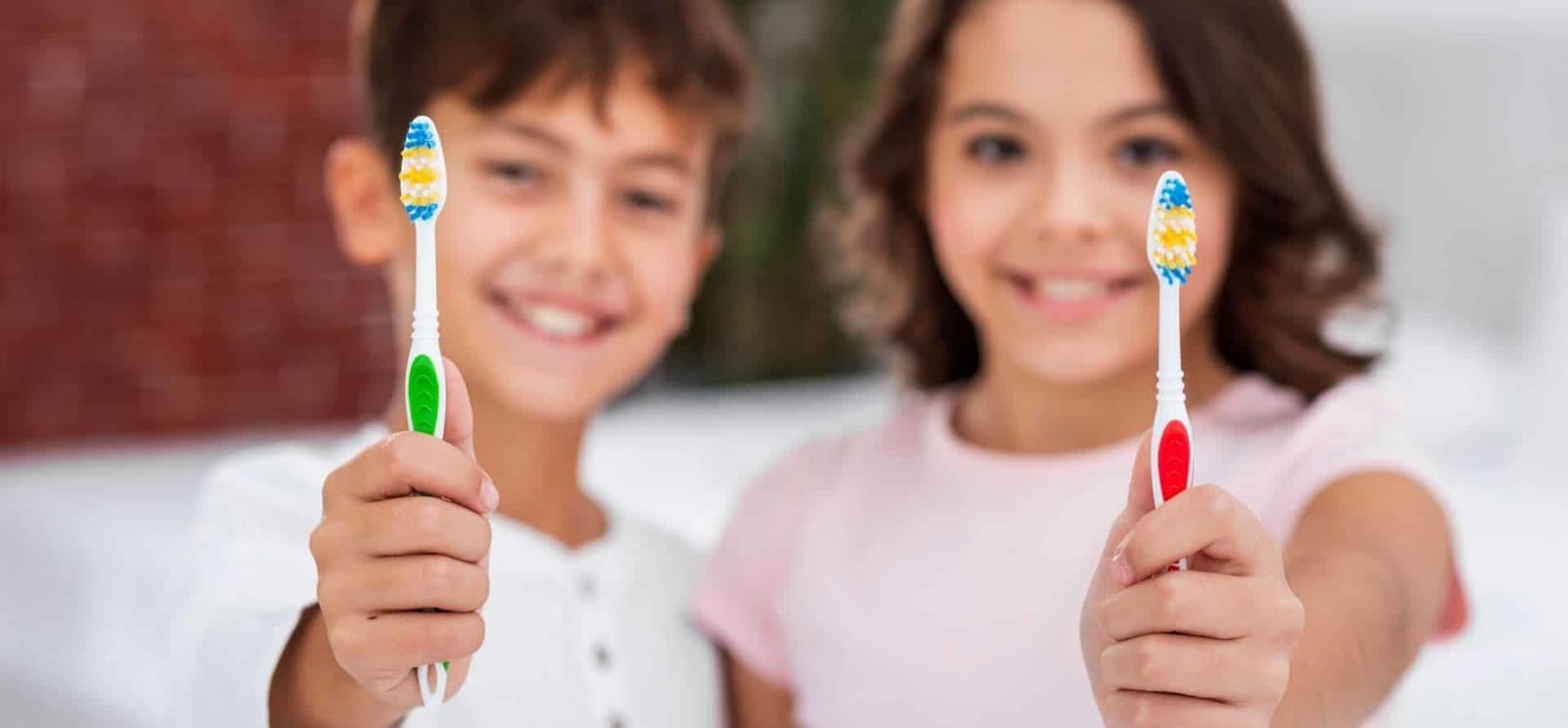
Brush as soon as the first milk tooth appears. Use a small, soft toothbrush and fluoride toothpaste twice a day for about two minutes, including last thing at night.
- Under three: use a smear of toothpaste containing at least 1,000 ppm fluoride, unless your dentist advises a higher concentration.
- Ages three to six: use a pea-sized amount containing 1,000–1,500 ppm fluoride.
- From age seven: use toothpaste containing 1,350–1,500 ppm fluoride.
Help your child brush until they are at least seven. Encourage them to spit out toothpaste without rinsing, and do not let them eat or lick it from the tube. These points follow the NHS advice on children’s teeth.
Our guides to choosing toothpaste for your child and making toothbrushing easier offer more practical ideas.
Feeding and drinks
Keep sugary foods and drinks to a minimum. Avoid putting sweetened drinks or juice in a baby’s bottle.
Breastfeeding has health benefits and is supported by UK guidance. It does not remove the need to look after your child’s teeth once they appear. There is no general recommendation to avoid breast milk or infant formula to protect teeth.
If feeds overlap with bedtime, aim to brush as close to bedtime as possible. Discuss any concerns about feeding and dental health with your dentist or health visitor rather than changing your baby’s feeds on the basis of a general article. The UK guidance on diet and oral health covers breastfeeding, bottle feeding and bedtime routines.
Make dental visits part of the routine
Take your child to the dentist when their first milk teeth appear, or before they are 12 months old. Your dentist will recommend when to return based on their needs and can advise whether fluoride varnish would help protect their teeth.
If your child is worried, tell the practice when booking. You can also read our guide to helping a child who is afraid of the dentist.

What if a milk tooth has decay?
The right treatment depends on the tooth, the extent of the decay and what your child can manage. Some teeth can be treated with a filling or a crown; others may need to be removed. Your dentist will explain the options and how to help your child through treatment.
Preventive care and treatment for an existing cavity serve different purposes. A protective coating is not a substitute for assessing a painful or decayed tooth. Guy’s and St Thomas’ NHS guidance on treating dental decay in children describes the main options.
For help with your child’s teeth, book a consultation.