Yellow teeth: causes and treatment options
Originally published
Yellow teeth are not necessarily unhealthy or poorly cleaned. Natural tooth colour varies, and a whiter smile is a personal preference rather than a measure of oral health. If the colour has changed, an assessment can help identify the cause before you choose treatment.
Why teeth can look yellow
The dentine beneath enamel contributes to tooth colour. Differences in enamel thickness and translucency affect how much of that shade shows through. Teeth can also become darker with age.
Tea, coffee and tobacco can leave surface stains. Plaque and tartar may affect appearance too, but brushing harder will not remove tartar or change the natural colour inside a tooth. Professional cleaning can remove deposits and some staining without bleaching the tooth itself.
Medicines, past dental treatment and injury can also affect appearance. Some medicines cause dry mouth, which needs attention for oral health; that does not mean every medicine in a particular group directly turns teeth yellow. Tell your dentist what you take, and do not stop prescribed medication because of a colour change. Yellow teeth alone do not diagnose a thyroid disorder or hormone problem.

A single tooth that becomes darker, especially after an injury, should be checked. Pain, swelling or a broken tooth need dental advice rather than a whitening product.
Looking after your teeth
Brush twice daily with fluoride toothpaste and clean between your teeth each day. Spit out after brushing rather than rinsing straight away. Your dentist can advise how often you need reviews and whether deposits need professional removal.
Frequent acidic drinks or acid reflux can contribute to enamel wear. Keep a balanced diet rather than cutting out all fruit to protect tooth colour. Avoid repeated sipping of acidic drinks or trying to whiten teeth with lemon juice. Ask for advice if you have reflux or frequent vomiting. Support to stop smoking benefits your mouth and general health as well as reducing new tobacco staining.
Cleaning, whitening or veneers?
Start by finding out whether the concern is surface staining, natural colour or a change within a tooth. You may decide that no cosmetic treatment is needed.
Dentist-supervised whitening can lighten natural teeth, but crowns, fillings and veneers will not change colour in the same way. Teeth and gums should be assessed first. Sensitivity and gum irritation can occur, and the result is not permanent. Cosmetic whitening is an adult treatment and is not recommended during pregnancy or breastfeeding.
A prescribed home whitening kit uses trays and instructions matched to the product. Household acids and improvised abrasive mixtures are not substitutes. A formulated toothpaste containing bicarbonate is different from scrubbing teeth with a homemade mixture.
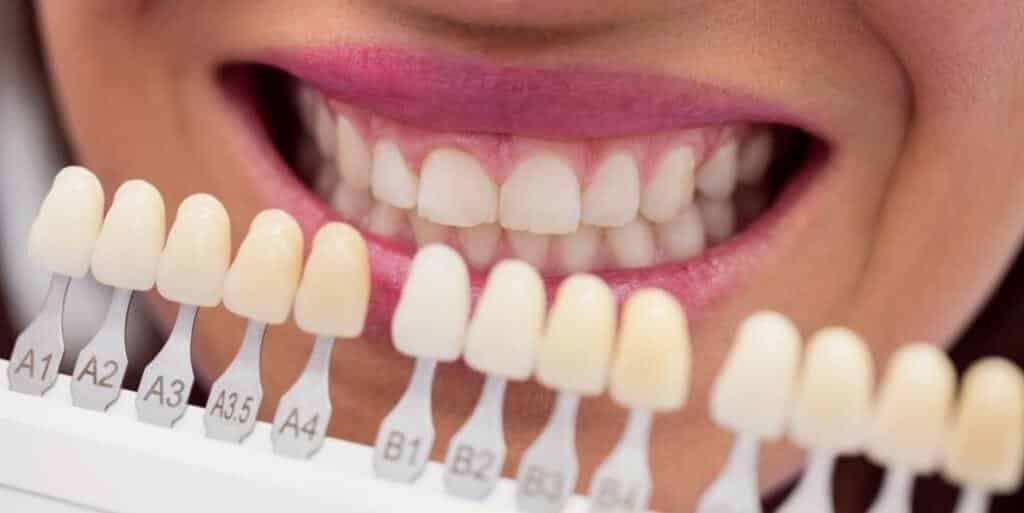
Enlighten’s manufacturer offers a Vita B1 shade guarantee and says a white diet is not required. B1 is a reference shade, not the whitest colour a tooth could ever be. Confirm the course and package with the practice; see our Enlighten guide.
Veneers cover part of a tooth to alter its appearance. They do not move the roots or guarantee straight teeth and a corrected bite. Some require irreversible removal of tooth tissue, and repairs or replacement may be needed later. Discuss less invasive options before deciding.
Planning the cost
Contact us for an assessment and written estimate. Spreading payments does not make treatment cheaper or guarantee finance approval. The current finance information explains the available terms, eligibility and affordability checks.