
Complete dentures: options, everyday care and costs
Originally published
A complete denture replaces all the teeth in the upper or lower jaw. If some teeth remain, a partial denture or another treatment may be more appropriate. Having several gaps does not automatically mean that the remaining teeth should be removed.
Dentures can help with eating, speech and appearance, including support for the lips and cheeks. The best option depends on your mouth, health and priorities, rather than a rule that every missing tooth will cause wider illness or a jaw problem.

Conventional complete dentures
These are removable appliances, most often with an acrylic base and artificial teeth. They rest over the gums and are shaped to fit the mouth. They take time to get used to and do not feel exactly like natural teeth.
At our practice, metal-framework and flexible dentures are partial dentures. We do not offer complete metal-framework or full flexible dentures. The Leeds guide to complete dentures and its partial denture guide explain that distinction.
Do not choose a material solely because it is described as flexible, unbreakable or automatically more comfortable. Ask which design is suitable for a fully toothless jaw and what its limitations, cleaning requirements and repair options are.
Options involving implants
For suitable patients, implants can help retain a removable denture. A fixed bridge supported by implants is another type of reconstruction. These are different treatment plans, not interchangeable names for one appliance.
Assessment must take account of bone, oral health, general health and the care needed afterwards. Implants involve surgery and ongoing maintenance; they are not a lifetime guarantee. Our implant guide gives an introduction to the questions to discuss.
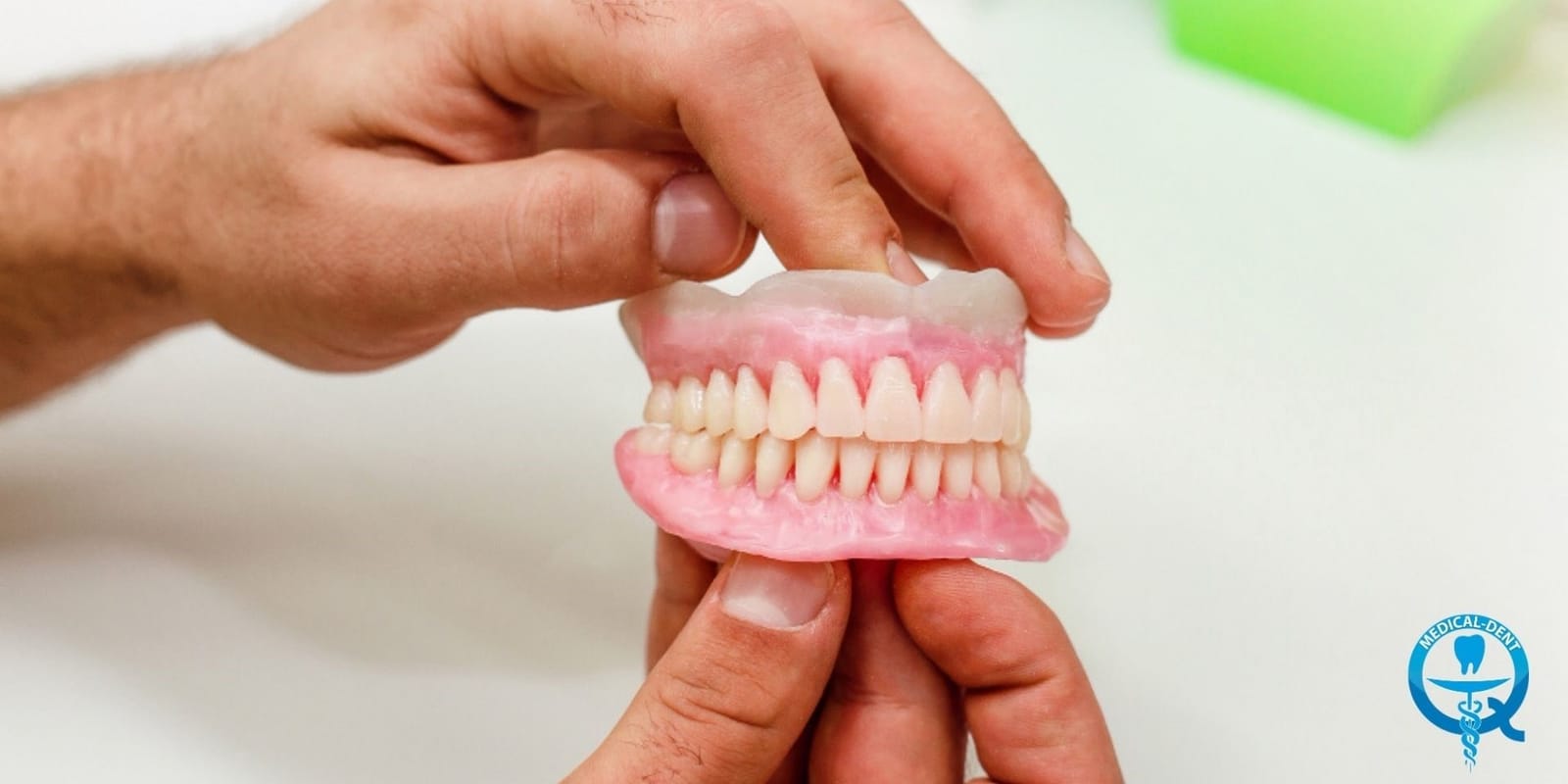
Making and maintaining a denture
Treatment usually involves records of your mouth and bite, trying the teeth in position where appropriate, fitting and review. The timetable varies. If a denture is fitted soon after extractions, healing can change the shape of the mouth, so adjustments or replacement may be needed.
Clean the denture daily using products suited to its material, and clean your gums and tongue too. Normally take dentures out at night unless your dentist gives different instructions. Avoid hot water and abrasive cleaning products. The NHS denture guide explains everyday care.
Return for advice if the denture slips, causes persistent soreness or becomes damaged. Do not try to adjust or repair it yourself. Regular reviews remain useful even if you have no natural teeth.
What does a complete denture cost?
Our fee schedule lists a full acrylic denture at £700 per arch. Ask for an estimate confirming the jaw or jaws being treated and what appointments, adjustments or other procedures are included; do not assume that one listed denture fee covers both jaws.
Other designs, treatment involving implants and any required preparatory care need their own assessment and quotation. See the prosthodontic fee schedule and current finance information for further details, or contact the practice to discuss your options.