
Alternatives to a dental implant
Originally published
If you cannot have an implant, or would prefer another approach, there may be other ways to replace a missing tooth. A fixed bridge or removable denture can be suitable, depending on your mouth and priorities.
First, the dentist checks why the tooth was lost, the health of the remaining teeth and gums, and how the gap affects eating, appearance and your bite. Discuss the benefits, limitations, maintenance and costs of each option.
Does every gap need replacing?
A space should be assessed, but it does not automatically cause headaches, decay or loss of neighbouring teeth. Teeth can move after a tooth is lost, although the extent and significance vary.
Replacing a tooth may help with chewing or appearance. In some cases, leaving and monitoring the gap is reasonable if it causes little difficulty. The decision should reflect your oral health and preferences rather than a blanket rule that every missing tooth needs an implant.
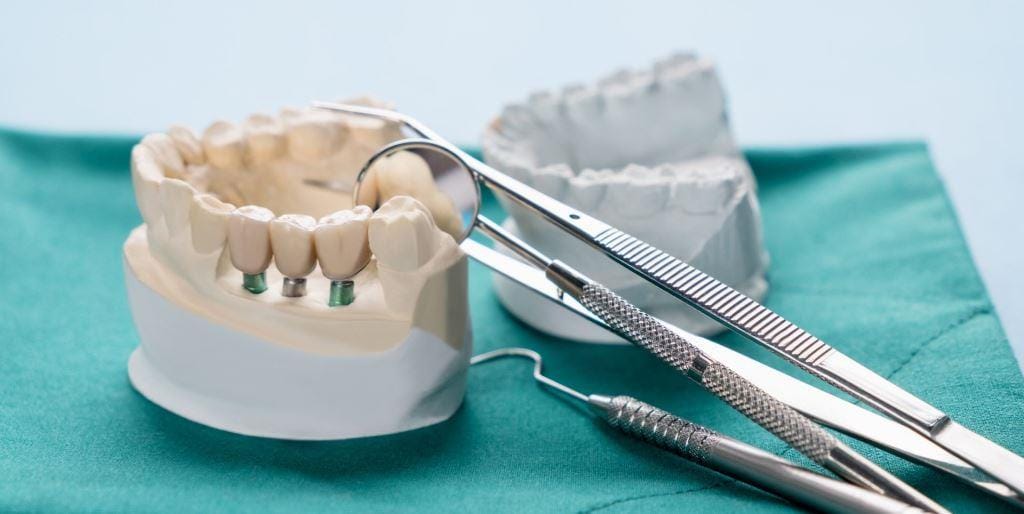
Fixed bridges
A bridge has a replacement tooth, sometimes called a pontic, supported by one or more neighbouring teeth. Its design depends on the location and size of the gap, the supporting teeth and your bite.
A conventional bridge uses a crown on a prepared supporting tooth or teeth. This removes tooth tissue and can affect the supporting tooth’s pulp, so the trade-off matters particularly when neighbouring teeth are otherwise sound.
A resin-bonded bridge uses a wing bonded to a neighbouring tooth, often with little or no preparation. It can be an option for selected spaces, but may become detached. Not every bridge needs two crowns or a supporting tooth on both sides: some designs have support on one side only.
A bridge is fixed in place, but it is not guaranteed to last for life. You need to clean around the supporting teeth and beneath the replacement tooth as shown by the dental team. Read our guide to bridges.
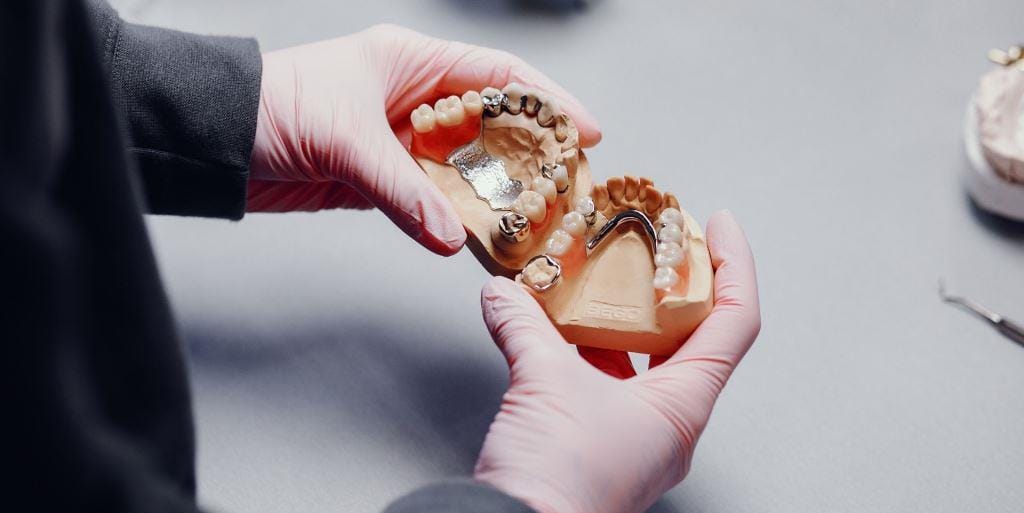
Removable dentures
A partial denture replaces one or more missing teeth; a complete denture replaces all the teeth in an arch. They can be useful when a fixed bridge is unsuitable or several teeth need replacing. They are not restricted to people with very large gaps.
Dentures take time to get used to and may need adjustments as the mouth changes. Clean the denture and any remaining teeth carefully, and usually remove it at night unless your dentist gives specific instructions, such as immediately after certain extractions. Persistent soreness or looseness needs review rather than repeated home adjustments.
Ask how the denture will be held in place and how it may affect eating and speaking. See our guide to dentures for more information.
Can a crown or veneer replace an implant?
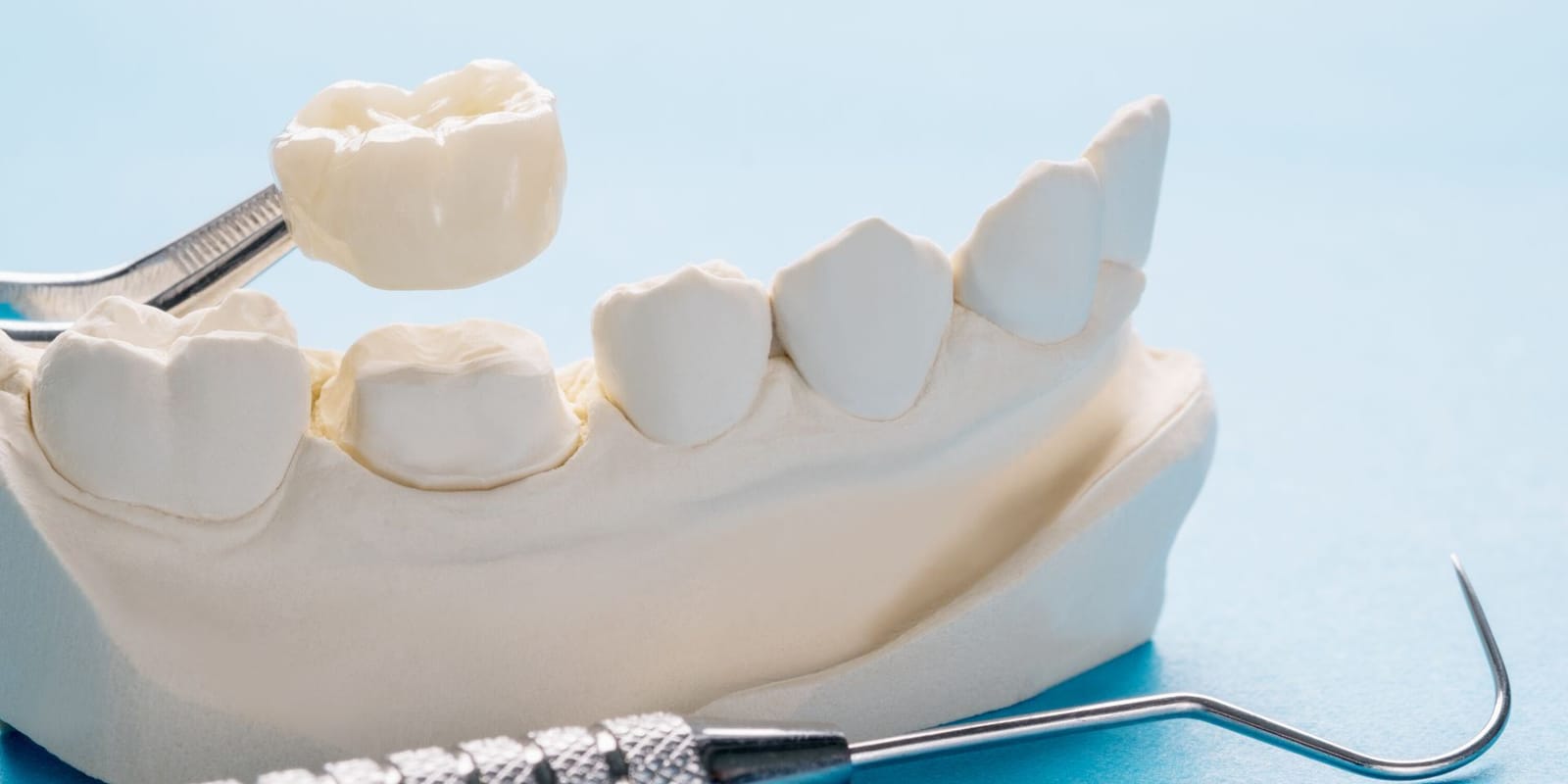
A crown on a natural tooth needs an existing tooth or root that can support it. It can help save a damaged tooth in a suitable case, potentially avoiding extraction, but a single crown alone does not fill a space where the whole tooth and root are missing. An implant-supported crown and a bridge are different restorations.
A veneer covers the front of an existing tooth. It may change the appearance of a selected chip or discolouration, but it cannot replace a missing tooth. Veneers are not a preventive covering that every healthy tooth needs, and some treatment involves irreversible preparation.
Choosing an option and planning the cost
Ask for a written plan covering the proposed restoration, any preliminary treatment and follow-up. The cheapest initial option may have different maintenance or replacement needs from another treatment. Our prosthodontic fees provide the current listed prices.
If you are comparing treatment in different countries, include travel, appointments and access to follow-up in the comparison. Do not assume that treatment is always cheaper in one country or that proximity alone guarantees a better outcome.

For instalments, check the current finance information and eligibility instead of relying on an old minimum-spend or interest-free claim. Contact us to discuss an assessment and the options for your gap.