Why milk teeth need treatment
Originally published
Milk teeth help children eat, speak and hold space as their mouths develop. Decay can cause pain, disturbed sleep and infection well before a tooth is ready to fall out. Having a problem assessed is worthwhile even if the tooth will eventually be replaced by a permanent one.
Treatment is chosen for the child and the tooth. It does not always mean drilling and filling, and leaving a tooth to fall out is not a safe answer to every problem.
Why act before a tooth hurts?
Early decay may not hurt. It can progress through a milk tooth and affect the pulp, the soft tissue inside it. Dental checks give the team an opportunity to identify problems and plan care before symptoms become more difficult to manage.
A damaged tooth can make chewing uncomfortable or affect a child’s confidence. Early loss of some milk teeth can also affect space for the permanent teeth, but it does not mean that every child will need braces. Bite development has several influences and is not a measure of how well a parent has cared for their child.
Start with daily care
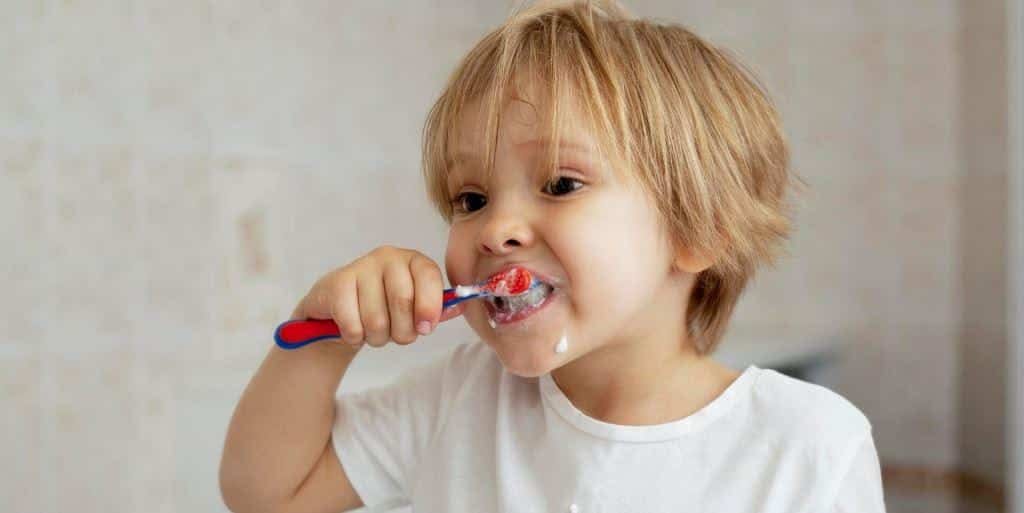
Begin brushing when the first tooth appears. Brush twice daily with fluoride toothpaste, including last thing at night. Children need an adult to brush or help until at least age seven, and sometimes longer.
Use a smear of toothpaste containing at least 1,000 ppm fluoride for children under three. From three to six, use a pea-sized amount containing 1,000–1,500 ppm. From seven, use toothpaste containing 1,350–1,500 ppm. Encourage spitting without rinsing when the child can do so.
Ask your dentist how to clean between teeth where they touch. Keep sugary foods and drinks to mealtimes. Arrange a first dental visit when teeth appear and agree future reviews according to your child’s needs, rather than applying one interval to everyone.
Professional fluoride treatment or fissure sealants may be recommended to reduce risk. They support daily care; no preventive treatment guarantees a child will never develop decay.
How are milk teeth treated?
The dentist considers the extent of decay, pain or infection, how long the tooth is likely to remain and what your child can manage. Milk teeth have different treatment considerations from permanent teeth.
Some early lesions can be managed with active prevention and monitoring. Other teeth need a filling or a crown. In selected cases, a preformed crown can seal decay without the conventional removal of all affected tissue. If the pulp is involved, a pulp treatment or extraction may be considered, depending on the diagnosis. Simply placing a filling over an untreated infection is not enough.
Your team should explain the options and how discomfort will be managed. Local anaesthetic may be needed for several procedures, not only when decay reaches the pulp. Tell them if your child is anxious so the plan can take this into account.
A tooth may need removing if it cannot be kept safely. The dentist can also assess whether early tooth loss needs any follow-up for space or bite development. Orthodontic treatment is not automatically needed from the earliest possible age.
What are the listed fees?
Our current listed services include:
- Fluoride varnish: £60 per arch.
- Fluoride application: £60 per arch.
- Fissure sealant: £60 per tooth.
- A filling on a milk tooth: £70.
- Milk tooth extraction: £70.
- A removable brace for one arch, for a patient under 18: £400.
These are separate listed services, not a package every child needs. Varnish is itself a way of applying fluoride: ask which listed treatment is recommended and what it includes rather than assuming the first two fees must be added together. Braces require a separate assessment.
See our dental treatment fees and orthodontic fees, and ask for an estimate for your child’s plan. If you are considering finance, check the current terms and ask whether they apply to the proposed treatment. Approval is not automatic.
When a child needs help sooner
Do not wait for the next check-up if a tooth hurts. Swelling, pus, fever or pain preventing eating or sleeping needs urgent dental advice; NHS 111 can help if you cannot obtain it. Breathing or swallowing difficulty or swelling affecting the eye needs emergency assessment through 999 or A&E.
Contact us to arrange a visit. Our guide to toothache in children explains what to watch for while arranging care.