
Veneers in the UK: options, preparation and costs
Originally published
A veneer is a thin covering placed on the front of a tooth. It can change the visible colour or shape, cover a selected chip or reduce the appearance of a small gap. Having uneven or darker teeth does not in itself mean you need veneers.
Start with an examination and a discussion of what bothers you. The aim is to choose an appropriate treatment while preserving healthy tooth tissue wherever possible.
When might a veneer help?
Veneers may be considered for changes that cannot be managed satisfactorily with a smaller repair or another suitable option. They are not a preventive treatment for healthy teeth and do not make a tooth immune to damage or decay.
Covering the surface can disguise a minor irregularity, but it does not straighten the root or correct the underlying bite. Braces may be more appropriate when teeth need moving. Whitening may be an option for the colour of natural teeth, although it will not change the shade of existing restorations.
Decay and gum disease should be treated first. Your bite, grinding habits and the amount of healthy tooth remaining also affect whether veneers are suitable.
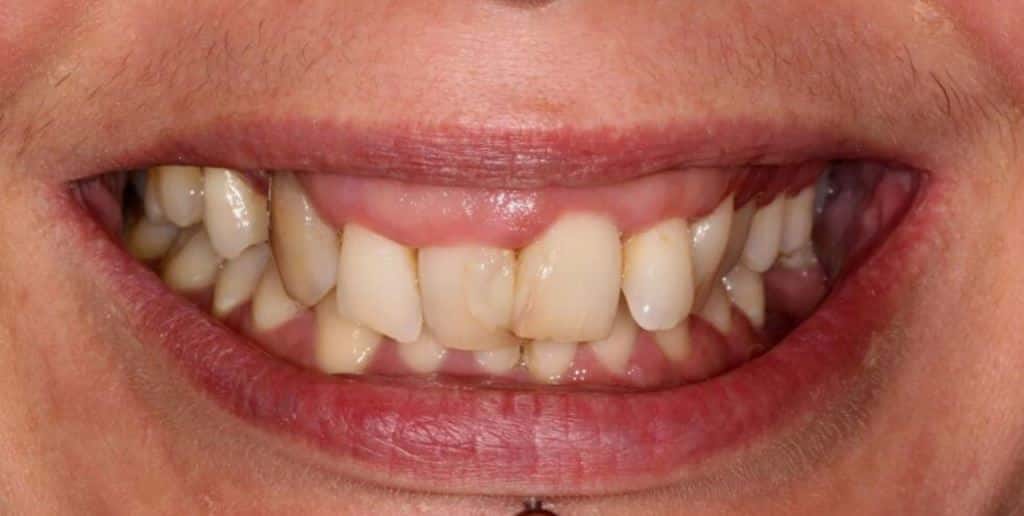
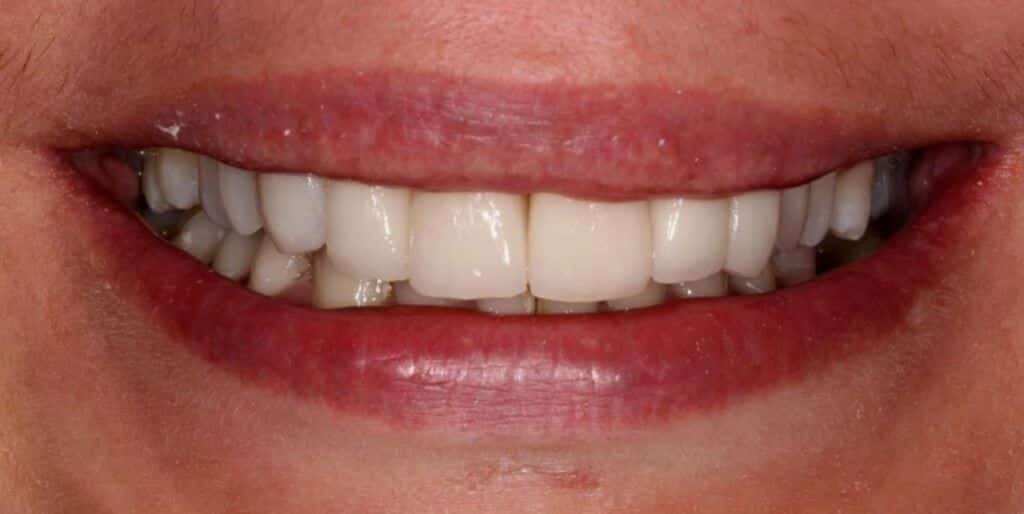
The photographs illustrate this article. They do not establish the treatment used or guarantee a particular result.
Porcelain or composite?
Porcelain veneers are made separately using an impression or digital scan. They can provide a durable surface with good resistance to staining, but can still chip, crack or come loose. Their appearance is planned to suit the individual tooth and smile.
Direct composite veneers are built on the tooth using tooth-coloured resin, which the dentist shapes, hardens and polishes. They often require fewer visits and can be easier to repair. They may stain or wear more readily than porcelain and need maintenance.
Neither material is automatically the best choice for every tooth. Discuss the amount of preparation, the likely result, repair options and cost before deciding.
Does fitting a veneer damage the tooth?
The amount of preparation varies. Some teeth need little or no reduction; others need enamel removed to make space without leaving the veneer too bulky. There is no universal half-millimetre rule, and treatment should not mean routinely stripping away the whole enamel layer.
Where enamel is removed, that change cannot be undone. Ask how the tooth would be cared for if the veneer failed and whether another restoration would be needed. No-preparation treatment is not suitable for everyone and should not be assumed to be fully reversible.

What happens at the appointments?
The dentist will assess your mouth and agree the proposed shade and shape with you. For porcelain, preparation and an impression or scan are followed by checking and bonding the separately made veneer. Temporary protection may be needed between visits. Direct composite is applied and shaped on the tooth rather than following exactly the same laboratory process.
The dentist checks how the teeth meet after fitting. Contact the practice if your bite feels wrong, a veneer loosens or you develop persistent pain or sensitivity.
Looking after veneers and planning the cost
Veneers may last for years, but there is no fixed replacement date or lifetime guarantee. Their condition, the tooth underneath and your bite determine whether repair or replacement is needed. Avoid biting hard objects, brush with fluoride toothpaste twice daily and clean between the teeth. Continue regular dental reviews at the interval advised for you.
Check our current prosthodontic fees and ask for an individual estimate. Old UK–Poland price comparisons do not account for the same treatment, follow-up, travel or repairs. You do not have to treat every visible tooth to consider a change.
For payment options, read the current finance information and check the terms and total cost. Contact us if you would like to discuss veneers and alternatives.