A sore mouth in children: causes and when to get help
Originally published
A sore mouth can make a child reluctant to eat, drink or brush their teeth. “Stomatitis” describes inflammation inside the mouth; it is not one infection with one treatment. The cause may be a virus, oral thrush, an ulcer or an injury.
Watch how much your child drinks and whether they are passing urine normally. Painful mouth sores can lead to dehydration, particularly in younger children.
When to get help
Seek urgent advice from a GP or call NHS 111 if your child cannot drink, has fewer wet nappies or is passing less urine than usual, has few tears, or is becoming increasingly unwell. A high temperature can occur with mouth infections; it should not be dismissed because the mouth sores seem minor.
Call 999 if your child has difficulty breathing, is difficult to wake or is confused. A child with a weakened immune system and new mouth sores needs prompt medical advice.
For milder symptoms, a pharmacist, dentist or GP can help identify the likely cause and suitable treatment. Arrange a check for ulcers that keep returning, become worse or last more than three weeks. Do not wait three weeks if your child is unwell or struggling to drink.

Different causes need different care
Herpes simplex gingivostomatitis can cause painful ulcers, inflamed gums, lip blisters and fever. It is caused by the virus associated with cold sores. Hand, foot and mouth disease is another viral illness; mouth ulcers may occur with a rash on the hands and feet.
Oral thrush is caused by an overgrowth of Candida yeast. It can produce white patches that do not wipe away easily and may make feeding uncomfortable. Do not scrape them off. A baby under four months with suspected thrush should be assessed by a GP.
Aphthous ulcers, often called canker sores, are different from herpes and thrush. They are not normally caused by a virus and are not contagious. A bite or irritation from a sharp tooth can also leave a sore area.
Mouth inflammation is not simply a “dirty hands disease”. Handwashing helps reduce the spread of some infections, but not every sore mouth results from poor hygiene, and a child can become ill despite careful care.
Helping your child feel comfortable
Offer small amounts of fluid often. Continue breast or formula feeds for babies. For children eating solids, cool drinks and soft food may be easier to manage; avoid food and drinks that sting. Do not force food, but get help if fluid intake is inadequate.
Ask a pharmacist or clinician about pain relief suitable for your child’s age and health, and follow the product instructions. Not every mouth gel or rinse is suitable for young children. Avoid adult products or rinses a child cannot spit out safely.
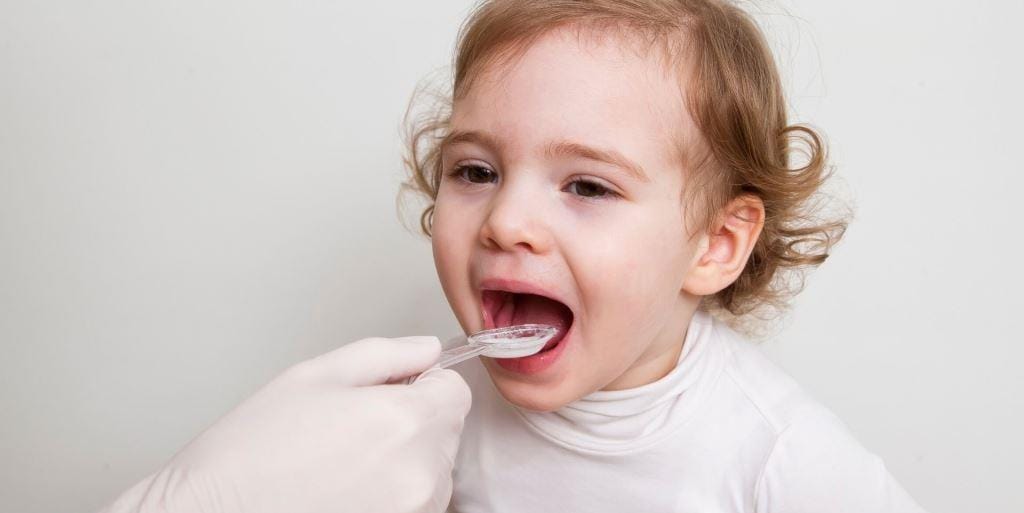
Treatment depends on the cause. Thrush may need an antifungal medicine; antibiotics do not treat viral infections. A clinician decides whether any specific medicine is needed. Hydration and pain control are often the main priorities.
Everyday care and prevention
Help your child clean their teeth gently with a soft toothbrush. From the first tooth, use fluoride toothpaste in the amount recommended for their age; wiping gums with water is not a substitute for brushing teeth. See our guide to caring for children’s teeth.
Wash hands regularly and avoid sharing cups, cutlery or toothbrushes during an infection. Clean feeding equipment and sterilise it as recommended; follow manufacturers’ instructions for dummies and teethers rather than boiling every item. Anyone with a cold sore should avoid kissing a baby.

Arrange the first dental visit when the first teeth appear, and continue check-ups as advised. Familiar visits can help a child feel more comfortable, though they cannot guarantee that a child will never feel anxious. For dental concerns, contact the practice; use urgent medical services for the warning signs above.