
Restoring or replacing teeth: what to expect at a consultation
Originally published
Treatment to restore damaged teeth or replace missing ones is not only for older people. You might need advice after an injury, because a tooth has broken down, or because an existing denture or bridge no longer feels comfortable.
Prosthodontics is the area of dentistry concerned with restoring and replacing teeth. A general dentist can assess many of these problems and explain whether specialist input would help. If you prefer to discuss treatment in Polish, mention this when booking.
When is an assessment useful?
Book an appointment if you have a missing or broken tooth, difficulty chewing, a loose restoration or a denture that rubs. The aim is to understand the problem before choosing a solution. A small chip does not automatically need a crown, and a missing tooth does not always have to be replaced.
The position of a gap, your remaining teeth, gum health, bite and preferences all matter. Neighbouring teeth can move in some cases, but pain, changes in facial shape or digestive problems are not inevitable consequences of every missing tooth. Monitoring may be reasonable when a gap causes no difficulty.
Jaw pain or a bite concern may need a broader assessment. Crowns, bridges and dentures are not a guaranteed treatment for every bite problem or jaw-joint symptom.

What happens at the first visit?
The dentist will ask about your medical history, medicines, symptoms and what you would like to improve. Bring any existing dentures and relevant records from previous treatment. Explain what works well for you as well as what is uncomfortable.
The examination checks the teeth, gums and tissues that would support a restoration. X-rays, photographs, impressions or scans may be useful when indicated; a jaw X-ray is not an automatic requirement at every first appointment.
Decay, gum disease or an infection may need treatment before a final restoration is made. You can still have an initial assessment while these issues are being addressed. More complex care may involve several clinicians, with a clear plan for who is responsible for each stage.
What options might be discussed?
A filling or bonded repair may be enough for some damaged teeth. A crown covers more of a tooth and may be appropriate when more support is needed. A veneer mainly changes the front surface and appearance; it is not a substitute for every type of repair.
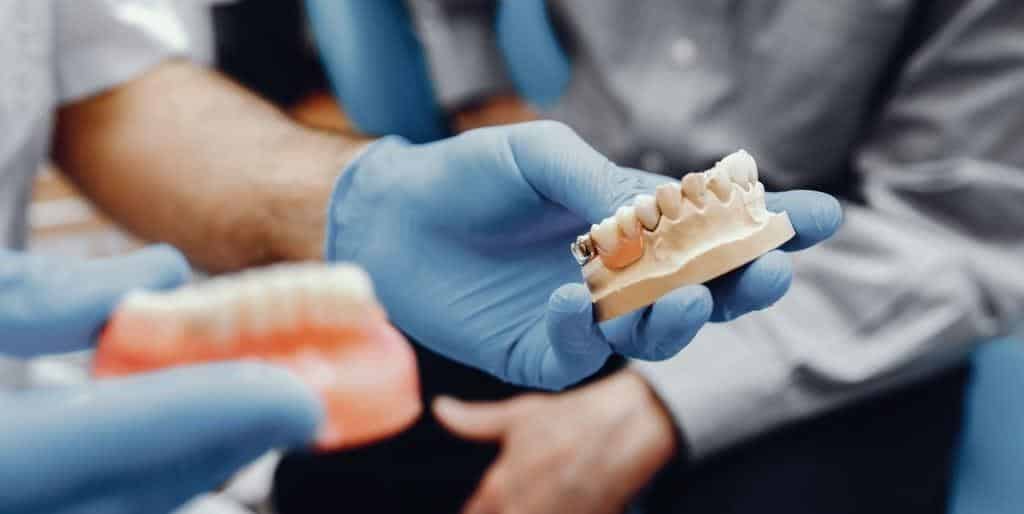
For missing teeth, options can include a bridge, removable denture or an implant-supported replacement. Each has different requirements, maintenance needs and effects on the remaining teeth. Read about bridges and their alternatives.
A denture described as flexible is generally removable; flexibility does not make it a fixed bridge. Ask the dentist to show you the proposed design so that you understand how it will be supported and cleaned.
Costs and the treatment plan
The number of appointments depends on the work involved and any healing or preparatory treatment. Ask for a written plan that explains the consultation, restoration, temporary stages, reviews and possible future maintenance costs.
Our prosthodontic fees list individual services. They should not be confused with the total price of every treatment plan. If you are considering instalments, consult the current finance information and request a quotation. Approval is subject to the lender’s assessment.
Contact the practice to arrange an assessment. If you have pain or swelling, describe it when booking so that the team can advise on urgency rather than treating it as a routine cosmetic enquiry.