Early childhood tooth decay: bottles, prevention and treatment
Originally published
Tooth decay can affect a child as soon as teeth appear. The term “bottle tooth decay” is often used for decay in young children, but bottles are only one part of the picture. What a child drinks, how often their teeth meet sugars, brushing and fluoride protection all matter.
Baby teeth help children eat and speak, and they hold space for adult teeth. They need care even though they will eventually fall out.
What contributes to early tooth decay?
Bacteria in dental plaque use sugars to produce acids that damage the tooth surface. Frequent sugary drinks or snacks give teeth less time to recover between these acid attacks. Sipping a sweet drink over a long period, from either a bottle or a cup, increases that exposure.
Milk feeds are important for babies. Breastfeeding has health benefits, and this advice is not a reason to stop breastfeeding or replace necessary breast milk or formula feeds with water. If you are concerned about night feeds and teeth, ask your dentist or health visitor for advice suited to your child’s age and feeding needs.
Avoid putting juice, sweetened tea or other sugary drinks in a bottle. Introduce an open or free-flow cup from around six months as your baby learns to drink; a cup does not make sugary drinks harmless. The NHS guide to drinks and cups explains suitable drinks at different ages.
Early decay may look like a chalky white patch, but white or brown marks are not enough to diagnose it at home. Some decay is difficult to see. Arrange a dental check if you notice a change, even if your child is not in pain.

Start with a simple brushing routine
Use a small, soft toothbrush and fluoride toothpaste as soon as the first tooth appears. Brush twice a day, including last thing at night. For children under three, use a smear of toothpaste containing at least 1,000 ppm fluoride. Your dentist may recommend a different strength if the risk of decay is higher.
From three to six years, use a pea-sized amount of toothpaste containing 1,000–1,500 ppm fluoride. Encourage your child to spit out excess toothpaste when they can, without rinsing afterwards. An adult should brush or help with brushing until at least age seven, and longer if needed.
There is no need to make a baby rinse their mouth. Cleaning the gums before teeth appear does not replace brushing with fluoride toothpaste once teeth have erupted. You can read more in our guide to caring for baby teeth.
Arrange the first dental visit when the first tooth appears, and by the first birthday. If that has not happened yet, book now rather than waiting until age three. A short introductory appointment can help your child become familiar with the setting, but pain or swelling needs prompt assessment rather than an introductory visit alone.
How is early childhood decay treated?
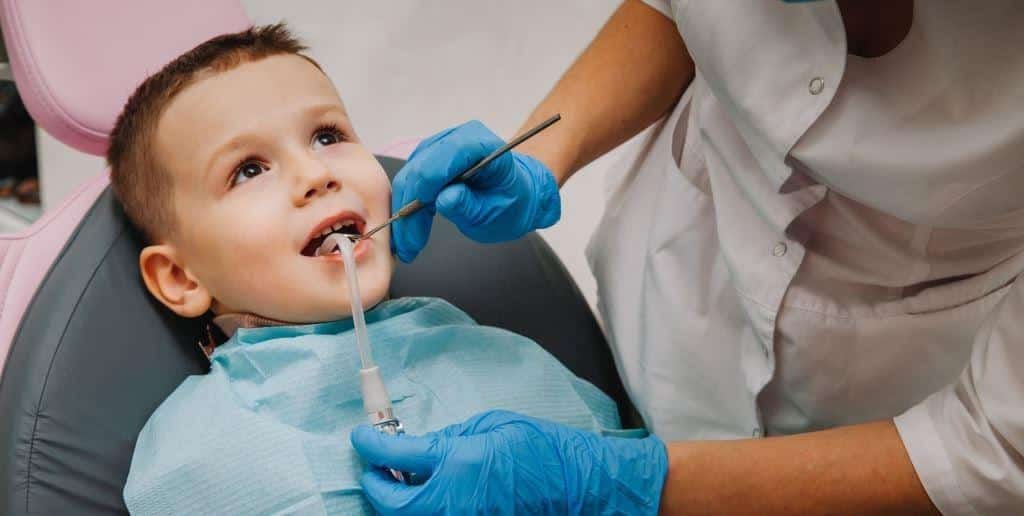
The right treatment depends on the depth of the decay, symptoms and how your child can manage dental care. Early damage before a cavity forms may be controlled with fluoride, changes to diet and brushing, and follow-up. Fluoride varnish is part of that care, not a substitute for the daily routine.
Once a cavity has formed, a filling or another treatment may be needed. Some baby teeth benefit from a protective crown; badly damaged or infected teeth may need to be removed. Your dentist will explain the options and arrange additional support or referral where needed. There is no reliable “one week” timetable for decay to affect neighbouring teeth.
At our practice, fluoride varnish is £60 per arch, and a filling on a baby tooth is £70. These are individual listed services, not a complete treatment quote. The examination will establish what your child needs.
Seek an urgent dental appointment for toothache, swelling or suspected infection. Contact NHS 111 if urgent dental help is unavailable. Call 999 or go to A&E for difficulty breathing, speaking or swallowing, extensive mouth swelling or swelling affecting an eye or vision.
If you have noticed a change in your child’s teeth, contact us to arrange an assessment.