
Composite bonding: treatment, benefits and limitations
Originally published
Composite bonding uses tooth-coloured resin to repair or change part of a tooth. It may help with a small chip, an uneven edge or a selected gap. Sometimes the material covers more of the front surface, which may be described as a composite veneer.
An examination comes first. The dentist checks the reason for the problem, your bite and the health of your teeth and gums before recommending a repair or cosmetic change.
What can bonding do?
Composite can add to the shape of a tooth and mask some discolouration. It does not move the root, so it cannot correct every spacing or bite problem. Braces may be more suitable where teeth need moving, while whitening may be an option if the main concern is the colour of natural teeth.
A chipped tooth needs assessment rather than simply covering the damage. The dentist checks whether there is a crack or deeper injury and whether a small repair is enough.
What happens during the procedure?
The dentist agrees a shade and shape with you, cleans the surface and prepares the tooth as needed. Bonding generally aims to preserve tooth tissue, but some cases require removal of decay or reshaping. It is not automatically a completely reversible procedure.
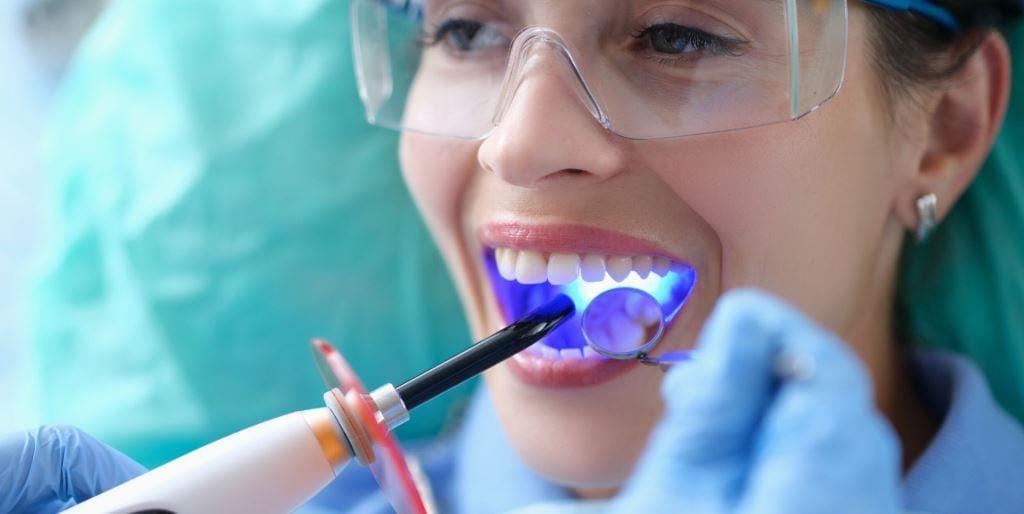
The surface is conditioned and an adhesive applied before the composite is added and shaped. A curing light hardens the material, which is then finished and polished. The dentist also checks how it meets the opposing teeth.
A small repair may be completed in one appointment, but several teeth or preliminary treatment can require more time or visits. Whether local anaesthetic is needed depends on the work. It is better to discuss comfort and timing in advance than assume every treatment is painless and quick.

Bonding or porcelain veneers?
Direct composite is built on the tooth. Porcelain veneers are made separately and bonded onto a prepared surface. Composite can often be repaired more easily, while porcelain generally resists staining and wear better. Both can chip, loosen or require replacement.
Bonding is not limited to a short-term temporary fix, and porcelain veneers are not a lifetime solution. The amount of preparation, condition of the tooth, bite and your preferences all matter when choosing an approach. Read our guide to veneers.
If whitening is part of the plan, discuss the sequence with the dentist: existing composite will not whiten with the natural teeth. A named whitening system does not remove the need for assessment or guarantee that every patient completes treatment in two weeks.
Is bonding suitable for everyone?
Decay and gum disease need assessment and appropriate treatment before elective cosmetic bonding. Composite is also used to restore teeth after decay is removed, so having had decay does not rule out this material.
Grinding or clenching can increase the risk of chipping and may change the proposed treatment or protective measures. It is not a reason to assume that every person who grinds their teeth can never have a composite restoration.

Care, lifespan and costs
There is no universal five-year expiry date. Bonding can stain, wear or chip, and the dentist may recommend polishing, repair or replacement according to its condition. The tooth underneath can still develop decay.
Brush twice daily with fluoride toothpaste, clean between teeth and attend the reviews advised for you. Avoid biting nails, opening packets with your teeth or chewing hard objects. Report a rough edge, looseness, an altered bite or persistent pain. Good care reduces risks but does not guarantee a particular lifespan.
The fee depends on what is being repaired, how much of the tooth is covered and the number of teeth involved. See our prosthodontic fees and ask for an estimate that describes the actual treatment; the price of a composite veneer should not automatically be used for every small bonding repair. Contact us to arrange an assessment.