Teeth that chip or crumble: causes and treatment
Originally published
If your teeth keep chipping or crumbling, book a dental appointment to find out why. “Brittle teeth” describes a problem rather than a diagnosis. Decay, cracks and tooth wear need different approaches, and changing your diet alone will not repair a broken tooth.
What can weaken a tooth?
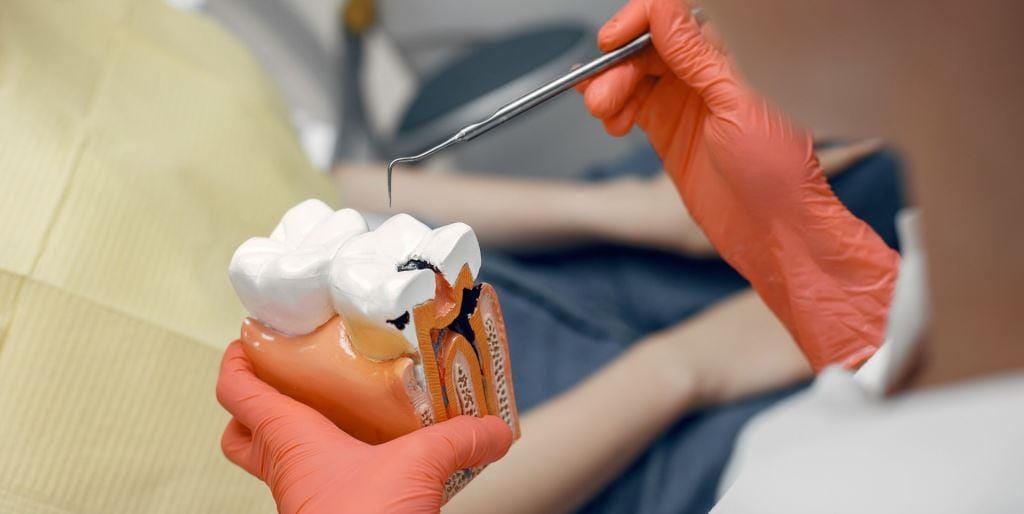
Tooth decay damages the hard tissues of a tooth. A tooth with a large filling may also have less natural structure left to withstand biting forces. Grinding or clenching, biting something hard and an injury can contribute to chips or cracks. The Oral Health Foundation explains common causes of cracked teeth.
Gum disease is a separate problem affecting the tissues and bone that support teeth. It should not be described as a disease that dissolves enamel. Tell your dentist if you also have bleeding gums or loose teeth.
Acid erosion is another form of damage. Frequent exposure to acidic drinks, or stomach acid from reflux or vomiting, can wear away the tooth surface. This differs from decay, which involves bacteria. The Oral Health Foundation’s erosion guide explains the distinction.
A balanced diet supports general health, but a chipped tooth does not establish that you lack vitamins A or D. Supplements are not a substitute for finding the cause of repeated damage.
Protecting your teeth
Brush with fluoride toothpaste twice a day and clean between your teeth. Limit how often you have sugary foods and drinks, and avoid repeatedly sipping acidic drinks between meals. Discuss persistent reflux or vomiting with a healthcare professional as well as your dentist.
Avoid chewing ice or using your teeth to open packaging. If a tooth is already damaged, avoid biting hard food on it while you wait for dental advice. If you suspect grinding, see our guide to bruxism.

Your dentist should recommend a check-up interval based on your needs. Professional cleaning can remove deposits, but it does not rebuild a piece of tooth that has broken away. Fluoride can help early decay before a cavity forms; lost tooth structure may need a restoration. See the NHS explanation of tooth decay and treatment.
What treatment might help?
The dentist will examine the damaged teeth and discuss possible causes. Depending on what they find, treatment may include a filling, a restoration covering part or all of the tooth, or care for an underlying problem such as grinding. Deep damage may need more extensive treatment, and some teeth cannot be saved.

For a recent break, read our broken tooth guide for what to do and when help is urgent. You can contact the practice for an assessment and written treatment estimate. If you are considering instalments, check the current finance information and eligibility.