
Whitening a root-treated tooth: options and costs
Originally published
A tooth may darken after an injury or root canal treatment. If it has lost its living pulp, it may be described as non-vital or “dead”, but that does not mean the tooth must be removed or that it can never cause pain.
Before changing its colour, a dentist needs to check the tooth, its root filling and the surrounding tissues. Whitening treats appearance; it does not treat an infection or repair a fracture.
Why does a tooth lose its living pulp?
Deep decay is one possible cause of pulp damage, but trauma, cracks and previous treatment can also be involved. It is not fair or accurate to assume that every root-treated tooth results from poor cleaning or missed appointments.
Root canal treatment removes inflamed or infected pulp and treats the space inside the tooth. The tissues around the root remain living and can become painful. A dark tooth may also be painless, so colour and pain alone cannot establish whether treatment has succeeded.
Seek prompt dental advice for pain, swelling or discharge. Severe swelling that affects breathing or swallowing requires emergency help through 999 or A&E.
Can a root-treated tooth be whitened?
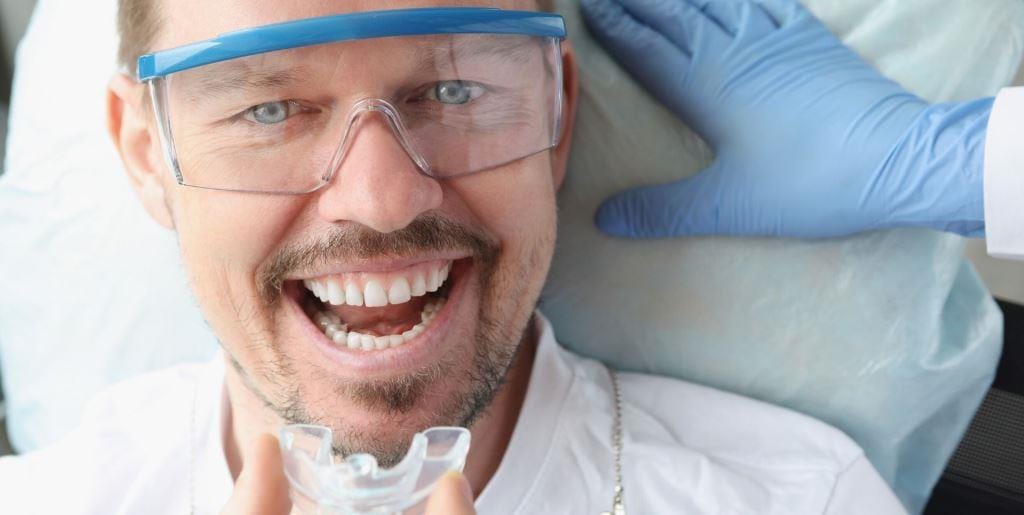
In selected cases, yes. Internal bleaching puts a whitening agent within the crown of a root-treated tooth. A dentist assesses whether this is suitable, often using an X-ray to check the root filling and surrounding area. Further root canal treatment may be needed first if there is a clinical problem; it is not automatic for every dark tooth.
It is too broad to say that external tray whitening can never affect a non-vital tooth. Some supervised techniques combine internal and external whitening. The method and product must be chosen for the individual tooth rather than assuming that a standard whitening kit will deal with it.
Do not open a tooth, remove a filling or put household whitening chemicals inside it. Any home stage must be specifically prescribed and explained by the dentist.
What happens during internal bleaching?
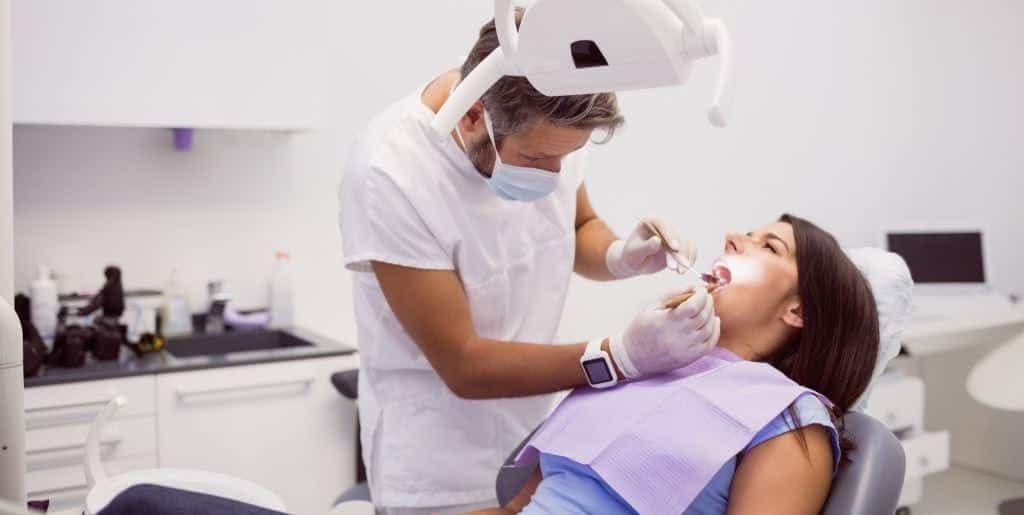
In one commonly used approach, the dentist accesses the chamber within the crown, checks the protective seal over the root filling and places the whitening agent. A temporary filling seals the access between visits. The agent may need to be changed over more than one appointment.
The schedule depends on the technique and response. Once treatment is complete and the colour has stabilised, the dentist places the final restoration. Do not assume an exact number of applications or a perfect match with neighbouring teeth.
Colour can relapse. Other risks include irritation and, rarely, root resorption, where root tissue is lost. Ask how these risks are reduced and what follow-up is needed. Contact the practice if a temporary filling comes out or you develop pain or swelling.
How are the fees calculated?
The listed fees are:
- Whitening a root-treated tooth: £80 per application.
- Small filling after internal whitening: £150.
- Large filling after internal whitening: £160.
The application fee is not the total price of the course. The final filling is a separate item, chosen according to the work needed; the small and large filling prices are alternatives, not two charges automatically added together. Ask for an estimate covering the expected applications, assessment and any other treatment.
If root canal treatment or retreatment is needed, it should be included separately in the plan. See our general dentistry fees for current listings. For instalments, check the current finance information, eligibility and total repayable.
If whitening is unsuitable or insufficient
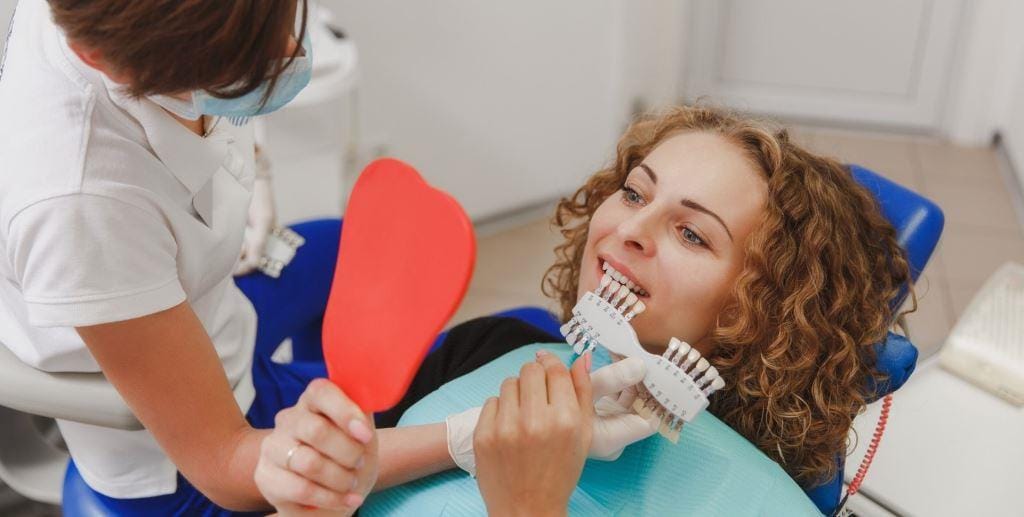
You may choose to keep the colour once the tooth is confirmed healthy. Composite bonding, a veneer or a crown may be alternatives in selected cases, depending on the remaining tooth and your bite.
A veneer is not a guaranteed way to strengthen every root-treated tooth, and a crown is not restricted to back teeth. These treatments have their own preparation, maintenance and replacement needs. Contact us to discuss the least extensive suitable option for your tooth.