
Toothache: causes, symptoms and treatment
Originally published
Toothache may feel sharp, dull, throbbing or difficult to pinpoint. It can appear with cold drinks, when you bite or without any obvious trigger. These details help a dentist investigate, but they cannot reliably tell you the diagnosis on their own.
A painkiller may make things more manageable while you arrange care. It does not repair decay or remove an infection, and pain disappearing does not always mean the tooth has recovered.
When should you contact a dentist?
Arrange an appointment for persistent or recurring toothache. Ask for urgent help if pain affects sleep or daily activities, is not controlled by suitable pain relief, or comes with swelling, fever or a bad taste. If you cannot access urgent dental care, contact NHS 111.
Call 999 or go to A&E if swelling affects breathing, swallowing or speaking, or involves the eye. A dental abscess needs dental treatment; do not wait for it to burst or try to drain it yourself. The NHS dental abscess guide explains the warning signs and treatment.
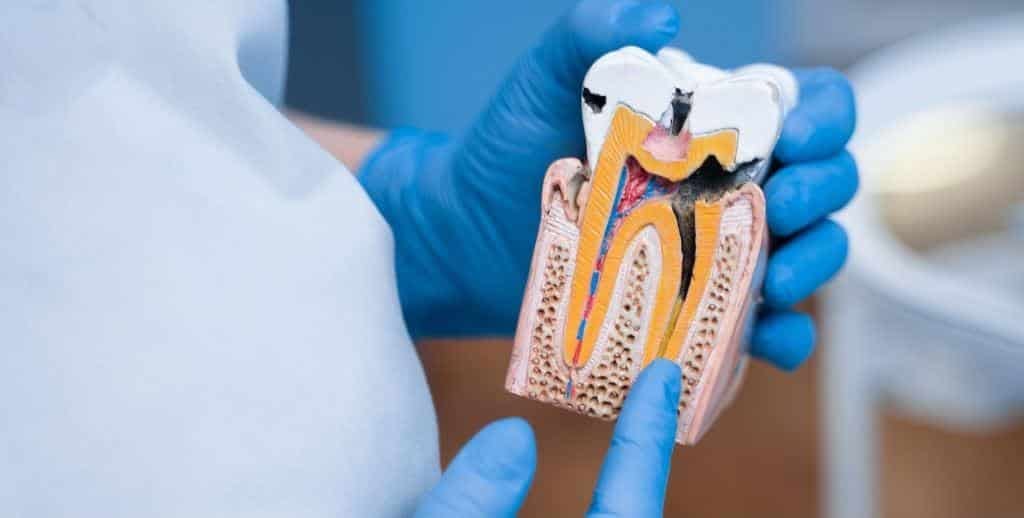
What might be causing the pain?
Decay or a damaged restoration. A cavity, cracked tooth or loose filling can cause discomfort. Small surface changes may not hurt at all, while deeper damage can affect the pulp inside the tooth. Pain severity does not neatly measure the size of a cavity.
Sensitive teeth. Exposed dentine can react to temperature or touch. However, a new sensitive area should not automatically be treated as harmless sensitivity: decay, a crack or gum recession may need attention.
Inflammation or infection. The pulp or tissues around a tooth can become inflamed or infected. An abscess is a collection of pus and may cause swelling or a bad taste, although not every infection produces dramatic visible signs.
Gums, tooth grinding or referred pain. Gum problems and strain in the chewing muscles can also hurt. Sometimes discomfort felt near the teeth comes from elsewhere. Tell your dentist about jaw symptoms, recent treatment, injuries and other changes in your health.
How is toothache treated?
Your dentist will ask about the symptoms, examine your mouth and carry out tests or X-rays when indicated. Tell them what brings the pain on, how long it lasts and whether it wakes you at night.
Treatment follows the findings. Early decay may be managed with preventive care and fluoride, whereas a cavity may need a filling. If the pulp is affected, root canal treatment or another appropriate procedure may be needed. Sometimes extraction is the most suitable option. See the NHS explanation of tooth decay treatment.
For an abscess, treatment usually includes drainage and dealing with the cause. Antibiotics are used when indicated, such as spreading infection or systemic illness, rather than automatically for every toothache. Repeated courses alone do not solve a dental source that still needs treatment.

While you are waiting
Ask a pharmacist about suitable pain relief and follow the packet. Choose soft food, avoid triggers and clean gently. Home measures are a temporary bridge to assessment, not a reason to postpone it.
If symptoms change or swelling develops while you are waiting, contact the dental service again. After treatment, keep the recommended follow-up appointments and ask how to reduce the chance of the same problem returning. The appropriate recall interval depends on your oral health rather than a fixed schedule for everyone.