
Tooth splinting: supporting loose teeth
Originally published
An adult tooth that becomes loose needs a dental assessment. Gum disease, an injury or other problems can affect its support. A splint may help stabilise selected teeth, but the cause of the movement still needs treatment.
If a tooth has loosened or moved after an injury, seek urgent dental care. Do not wait for a routine cleaning appointment or try to glue it to neighbouring teeth yourself.
What does tooth splinting involve?
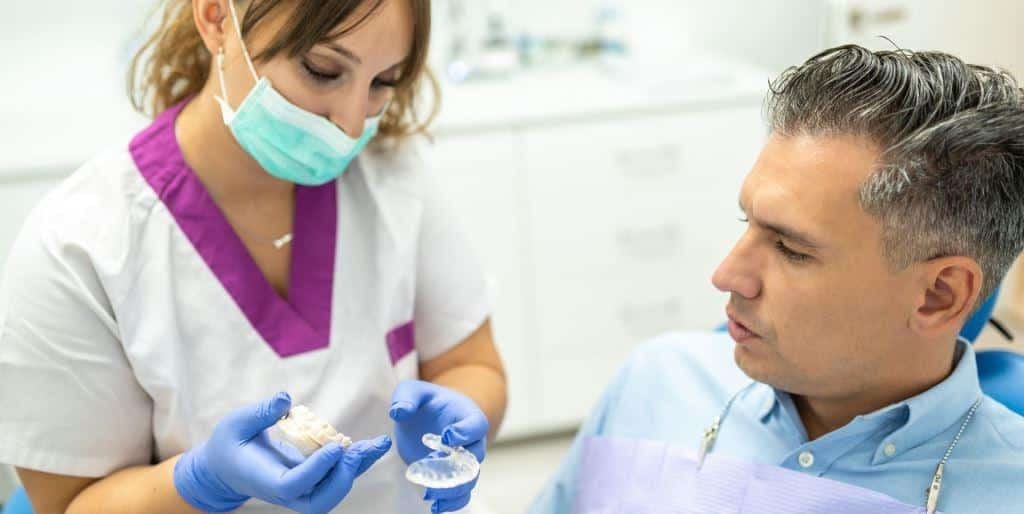
A dentist joins selected teeth with a bonded material, sometimes reinforced with fibre or wire. This allows the connected teeth to share some of the load and may make biting more comfortable. It does not mean that forces are spread evenly across the whole arch or that all movement permanently stops.
The design depends on the reason for splinting. A splint used after an injury may differ from one used alongside periodontal treatment. The dentist checks the bite and explains how to clean around the bonded material.
When might it be useful?
After certain dental injuries, a splint can hold a tooth in position while the supporting tissues heal. The required duration and follow-up depend on the injury. Even after the splint is removed, the tooth may need monitoring or further treatment.
For teeth affected by periodontitis, splinting may improve comfort during treatment or help manage persistent mobility. It is an addition to gum treatment, not a way to cure infection or replace lost supporting bone. Not every loose tooth can be retained, and not every patient with gum disease needs a splint.
Professional cleaning and treatment of inflammation form part of the periodontal plan. Their timing is individual; urgent stabilisation after an injury should not be delayed simply to complete a routine hygiene package.
Is this the same as a night guard?
No. A removable bite splint or night guard covers teeth and may be prescribed to protect them from grinding. Bonding loose teeth together does not treat the causes of bruxism. A retainer after orthodontic treatment has another purpose: maintaining tooth position.
These appliances may sometimes be discussed together, but they are not interchangeable. Ask which problem the proposed appliance is intended to address.

Living with a splint
A bonded splint can make cleaning more demanding. Ask for a demonstration of suitable interdental brushes or floss threading. Continue brushing with fluoride toothpaste and attend the agreed reviews. Decay is a risk if plaque accumulates; it is not an inevitable result of splinting.
You may notice the material with your tongue. Tell the dentist if it feels rough, affects your bite or causes soreness. If it loosens or breaks, contact the practice rather than trying to repair it yourself. Follow any advice about avoiding biting hard foods with the affected teeth.
A splint may be temporary or used longer term, with maintenance. It cannot guarantee that a tooth will last indefinitely or that dentures will never be needed.
What does it cost?
Our listed tooth-splinting fees are:
- Up to two teeth: £250.
- Three to four teeth: £300.
- Five to six teeth: £450.
See the prosthodontic fee page and ask what your plan includes. Assessment, gum treatment or other work may be needed separately. For instalments, read the current finance information; eligibility and terms apply.
Contact us if you have noticed a loose tooth or need advice about an existing splint.