
Tongue cleaning: why it helps and how to do it gently
Originally published
Your tongue is part of your daily mouth care too. Its textured surface can collect a coating, and gentle cleaning may help with breath odour. It only takes a short time, but pressing harder or scraping repeatedly can leave your tongue sore.
Bacteria are a normal part of the mouth. The aim is to remove loose coating and debris, not to sterilise your tongue or make every part look the same colour.
Tongue coating and bad breath
A coating can contain bacteria, shed cells and food debris. Some bacteria produce substances that contribute to unpleasant breath. However, the tongue is not the only possible source: gum disease, tooth decay, dry mouth and other conditions can also play a part.
If your breath remains unpleasant despite a consistent cleaning routine, arrange a dental check. Repeatedly using a scraper or covering the smell with mouthwash may delay finding the cause.

How to clean your tongue
Clean gently once a day. You can use a tongue cleaner or a soft toothbrush. Choose something comfortable and easy to control; there is no need to buy several products for the same task.
Reach only as far back as is comfortable, then draw the cleaner forwards with light pressure. Rinse it between passes and after use. Follow the instructions for the particular tool and stop if cleaning causes pain or bleeding. Do not scrape an ulcer or keep working at a patch that will not come off.
If you gag easily, start nearer the front. You do not need to force the cleaner to the very back of your mouth. Ask your hygienist to demonstrate a technique you can manage.
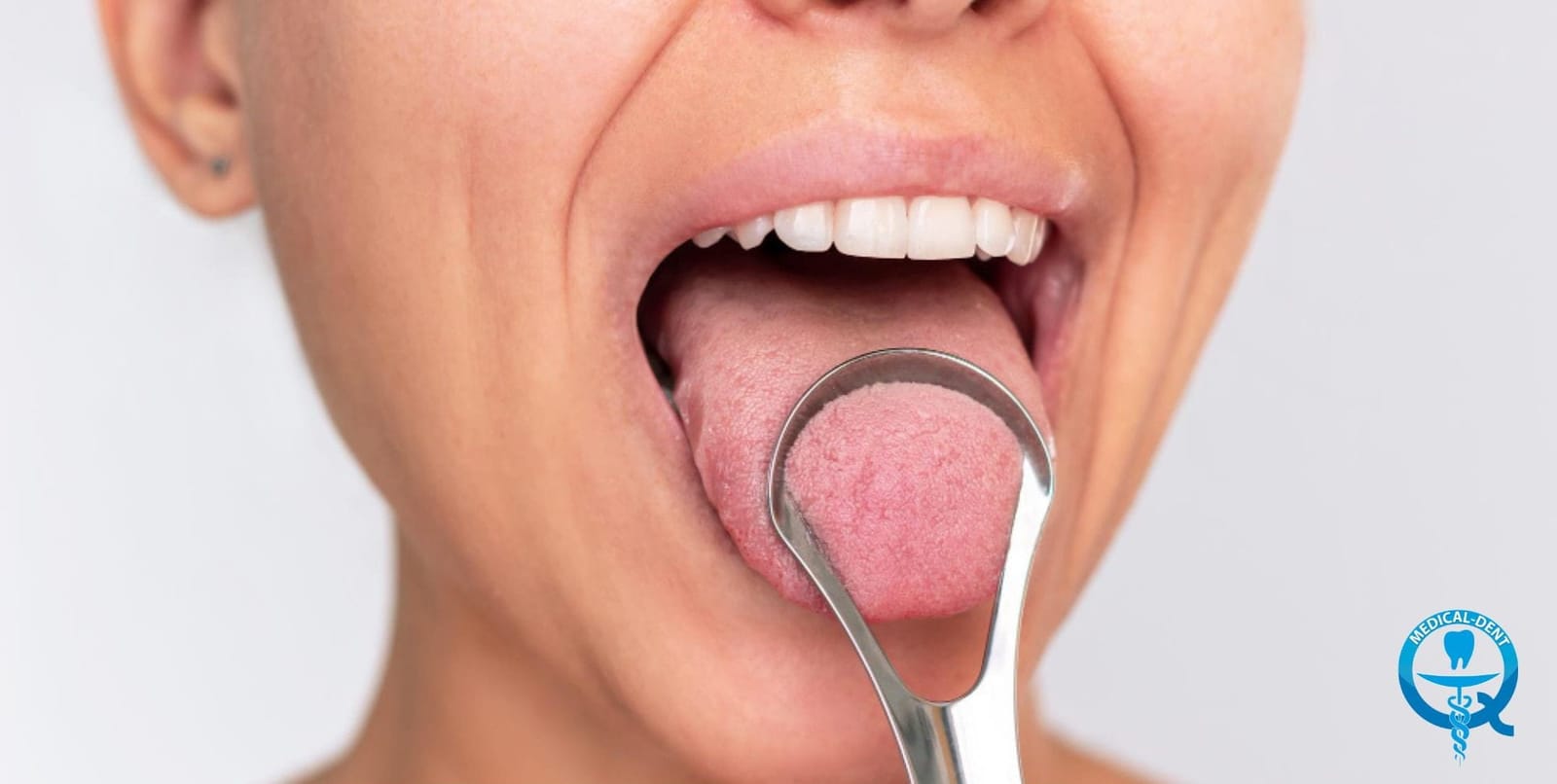
Does a change in colour mean something is wrong?
Colour alone cannot tell you the cause. A white coating does not always mean poor cleaning, and a yellow or brown appearance does not establish that you are dehydrated. Foods, tobacco, medicines and several mouth conditions can affect how the tongue looks.
See a dentist or GP if you have persistent pain, white patches or another unexplained change. A mouth ulcer lasting more than three weeks needs checking, even if it is not particularly painful. Do not try to remove a stubborn patch by scraping harder or self-treat it as thrush without advice.
Drinking water may help a dry mouth feel more comfortable, but persistent dryness also needs assessment. Tell your dentist about medicines you take and whether dryness affects eating, speaking or sleep.
Keep the rest of your routine simple
Brush your teeth twice a day with fluoride toothpaste and clean between them daily. Spit out after brushing rather than rinsing straight away. Tongue cleaning adds to this routine; it does not replace it or guarantee protection against tooth decay and gum disease.
Mouthwash is not compulsory for tongue cleaning. If your dentist recommends one for a particular problem, follow the directions and ask when to use it so it does not wash away the fluoride left by toothpaste.

Attend dental check-ups at the interval recommended for you. Bring up changes in your tongue or breath at the appointment, rather than assuming they are simply something you need to scrub away.
The NHS has further advice on bad breath and a sore or white tongue.