Tartar removal in the UK: what to expect
Originally published
Once plaque has hardened into tartar, ordinary brushing will not remove it. A dentist or dental hygienist can assess the deposits and remove them with suitable instruments. The right treatment and the interval between visits depend on your teeth and gums.
You do not need to wait for pain before seeking advice. Equally, forgetting the date of your last cleaning does not prove that you need a particular procedure today.
Plaque, tartar and surface stains
Plaque is a soft bacterial film that you can disrupt with daily cleaning. It can mineralise into hard tartar at a rate that varies between people and different areas of the mouth. There is no reliable rule that it must take weeks or months.
Tartar may be visible near the gum line, but some deposits lie below it. A dark line or a change in tooth colour is not enough to diagnose tartar yourself. The clinician can distinguish deposits from staining, decay or the edge of a restoration.

What happens at a scaling appointment?
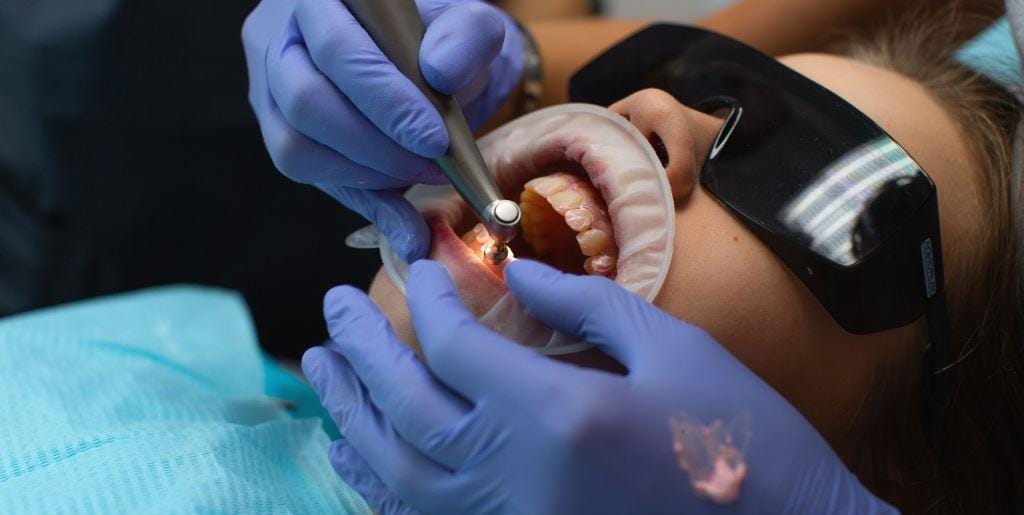
The clinician checks the area to be treated and discusses any sensitivity or concerns. Hand instruments, powered scalers or a combination may be used to remove deposits. The technique depends on the clinical situation rather than a universal hierarchy of “traditional”, chemical or laser treatment.
Cleaning beneath the gum line for periodontitis can be more involved than a routine scale and polish. Local anaesthetic may help, and treatment may be spread over several visits. The team should explain what is needed before starting.
Tell the clinician if treatment is uncomfortable. Some temporary sensitivity or tenderness can follow cleaning; seek advice if symptoms persist or worsen. Do not assume that significant pain or swelling is simply an expected effect of scaling.
Scaling, air polishing and fluoride varnish
These procedures serve different purposes. Scaling removes established tartar. Air polishing can remove plaque and surface staining where appropriate. Fluoride varnish is applied to help protect teeth against decay; it does not form a permanent shield or replace daily cleaning.
Our listed scale and polish fee is £110. The scale, Airflow and fluoride varnish package is £170. See our dental fees and ask whether the listed service covers your needs. Further periodontal treatment may require a separate plan.
Not everyone needs every element of the package. Nor is a six-month cleaning schedule right for every adult. Your clinician should recommend the interval based on deposits, gum health and risk, and review it as those needs change.
Keeping plaque under control
Brush twice daily with fluoride toothpaste and clean between your teeth using suitable interdental brushes or floss. Ask for help with areas that are difficult to reach. A mouthwash or water flosser may be useful in some circumstances, but it does not remove established tartar or replace all other cleaning.
Limiting frequent sugary foods and drinks helps reduce decay risk. Rinsing with water after eating can clear loose food, but it is not equivalent to brushing. Avoid scraping teeth yourself or using acidic mixtures to remove deposits.

When should you book?
If you can feel rough deposits or notice bleeding, persistent bad breath or sore gums, arrange a dental assessment. Gum disease can progress without obvious pain. Severe swelling or pain, or a loose adult tooth, needs prompt advice; NHS 111 can help if you cannot access urgent dental care.
Removing tartar supports gum care, but it cannot guarantee that gum disease will never return. Follow-up and daily cleaning are part of the treatment. Contact us to discuss an examination or hygiene appointment.