
Repairing a damaged tooth: options and costs
Originally published
A chipped or broken tooth does not always need to be removed. The repair depends on how much healthy tooth remains, whether decay or a crack extends below the gum, and the condition of the pulp and root. A dental examination, sometimes with an X-ray, helps establish which options are realistic.
Book a dental appointment if a tooth breaks, even if it does not hurt. If you find the broken fragment, keep it in milk or saliva and take it with you: sometimes it can be reattached. Severe pain or swelling needs prompt assessment. Difficulty breathing or swallowing, or swelling affecting the eye, requires emergency help.
Fillings and composite repairs
Composite is a tooth-coloured material used to rebuild parts of a tooth. It may be suitable for a small chip or a cavity once decay has been removed. The dentist shapes the material to fit the tooth and bite. Some repairs can be completed in one visit, but the extent of the damage determines the treatment needed.
A composite veneer covers the front of a tooth to change its appearance. It is not interchangeable with every filling, and it cannot replace a missing tooth or rebuild a tooth from its root alone. Neither a filling nor a veneer has a fixed replacement date: wear, fractures, decay and the condition of the surrounding tooth matter more than a set number of years.
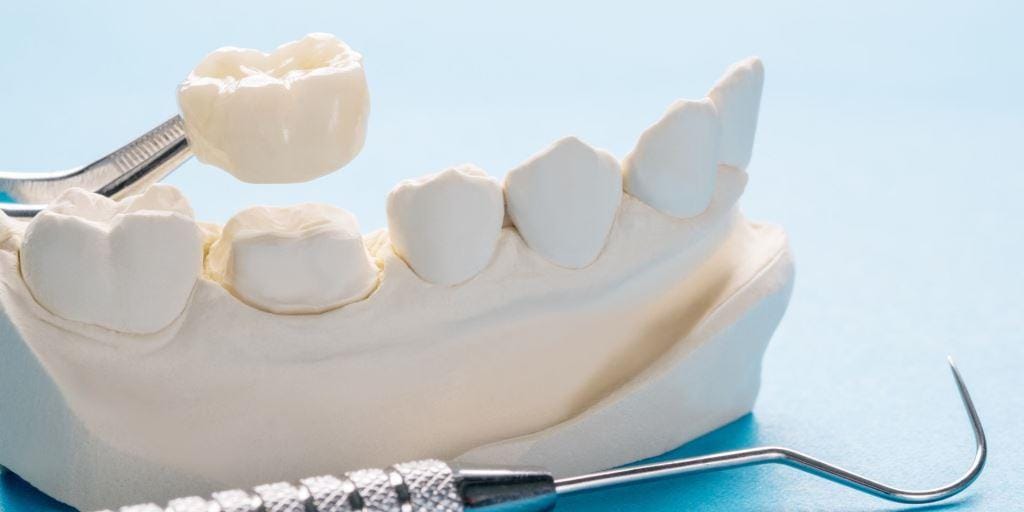
Inlays, onlays and crowns
An inlay fits within the biting surface of a tooth; an onlay also covers one or more cusps. A crown covers the prepared tooth more extensively. Your dentist will explain how much tooth tissue each option would require removing and whether a more conservative repair is possible.
For a crown, it is the tooth being restored that is prepared. Neighbouring teeth do not normally need to be filed down for a single crown. A conventional bridge, which replaces a missing tooth, is a different treatment and may involve preparing supporting teeth.
Crowns can restore shape and function, but they do not make a tooth immune to decay or fracture. Material choice depends on the tooth’s position, the bite, appearance and the amount of space available.
When is a post needed?
A severely damaged tooth may need root canal treatment before its final restoration. In selected root-treated teeth, a post placed within the root helps retain the core on which a crown sits. Posts may be made from fibre or metal; this is not the same as making an entire replacement tooth from fibreglass.
Not every root-treated tooth needs a post, and a post does not guarantee that the root will be stronger. If too little suitable tooth remains, the root is fractured or other problems prevent a predictable repair, extraction and replacement options may need to be discussed.

Planning treatment and costs
Ask your dentist what each option can achieve, what its limitations are and what may happen if you delay treatment. Your preferences and budget belong in that discussion alongside the clinical findings.
The cost depends on the repair, material and any additional treatment. Check our general dental fees and crown and prosthodontic fees, then ask for an individual estimate covering the proposed stages. A post, root canal treatment and final crown should not be assumed to be included in one quoted fee.
Finance may be available subject to status, affordability and terms. Medical-Dent acts as a credit broker, not a lender; see the current finance information.
Brush twice daily with fluoride toothpaste, clean between your teeth and attend reviews at the interval advised for you. Contact us to arrange an assessment of a damaged tooth.