How to keep your gums healthy
Originally published
Healthy gums are part of the tissues that support your teeth, along with the bone and other structures around their roots. Looking after them matters even when your teeth do not hurt.
Bleeding during brushing or cleaning between teeth is a reason to arrange a dental check. It is often associated with gum inflammation, but an examination is needed to establish the cause and the right care.
What causes gum problems?
Plaque is a film of bacteria that builds up on teeth. If it is not removed effectively, it can cause gingivitis: inflammation of the gums, which may look red or swollen and bleed easily. More advanced gum disease, called periodontitis, involves damage to the tissues and bone supporting the teeth.
Smoking and diabetes can increase the risk of gum disease. Medicines, hormonal changes and other health factors may also be relevant, so tell your dentist about your health and any medication. Bleeding alone does not diagnose a vitamin deficiency, liver disease or anaemia, and it does not mean everyone needs the same blood tests.
Seek an urgent dental appointment for very sore, swollen gums or teeth becoming loose. If you cannot get dental help, contact NHS 111. Severe swelling that affects breathing or swallowing needs emergency help through 999 or A&E.

A daily cleaning routine
Brush twice a day for about two minutes with fluoride toothpaste, including last thing at night. Clean along the gum line gently rather than scrubbing harder. Spit out the toothpaste afterwards without rinsing it away.
Clean between your teeth each day. Interdental brushes can help where they fit; floss can be useful in tighter spaces. Ask the dental team to show you the right size and technique. A water flosser may be an additional aid, but it does not make thorough brushing or an assessment unnecessary.
You do not need to brush after every drink or meal, and the aim is to control plaque rather than remove every bacterium from your mouth. Replace a worn or splayed toothbrush or brush head. If your gums bleed, continue gentle cleaning and seek advice rather than abandoning the area or trying to scrub away the bleeding.
Do mouthwashes or home remedies help?
A mouthwash may be recommended for a particular purpose, but it does not remove tartar or replace brushing, cleaning between teeth or treatment. Use it as directed, at a different time from brushing so it does not wash away the toothpaste’s fluoride.
Do not mix a hydrogen peroxide rinse at home or rely on herbal rinses to treat gum disease. Products can irritate the mouth, and temporary relief does not show that the cause has been dealt with. Ask the dentist or pharmacist which product, if any, is suitable.
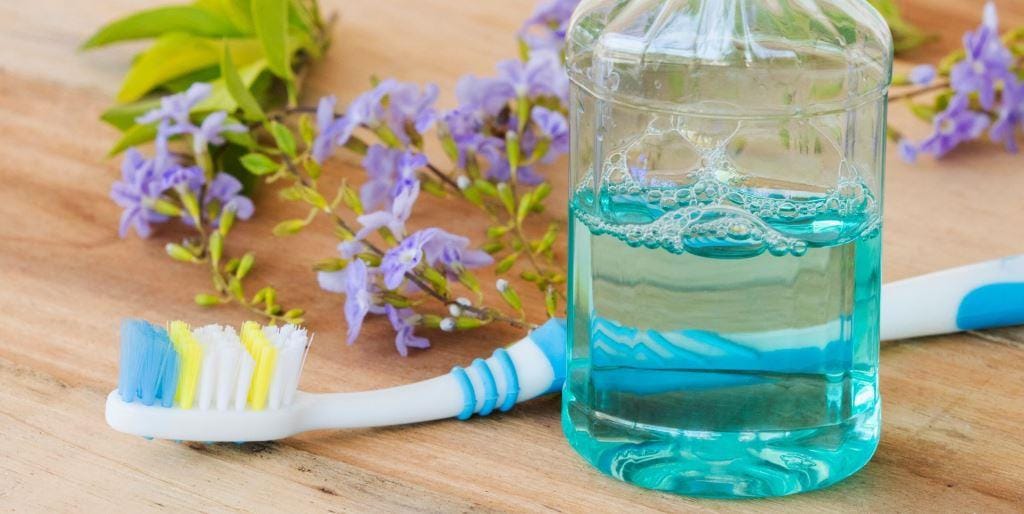
The photograph is illustrative; it is not a recipe or a recommendation to make a mouthwash.
Habits and professional care
Stopping smoking is an important step for gum and general health. A balanced diet supports health, but vitamins or particular foods do not cure established gum disease. Discuss diabetes management with your healthcare team if this applies to you.
Hardened plaque, or tartar, needs professional removal. The amount and type of treatment depend on the findings; not everyone needs the same cleaning procedure at every visit. More advanced gum disease may need treatment beneath the gum line and ongoing periodontal care.

Arrange check-ups at the interval advised for your risk and needs, rather than assuming six months suits everyone. If bleeding, swelling or bad breath persists, do not wait for the next routine visit. Contact us to arrange an assessment.