
How to floss your teeth and why it matters
Originally published
A toothbrush cannot easily reach every surface between your teeth. Cleaning those spaces helps remove plaque and trapped food. Floss is useful for tight contacts, while interdental brushes often work better where there is room for them.
You do not need to use every product on the shelf. Your dentist or hygienist can help you choose something that fits your teeth and that you can use comfortably each day.
How to use floss gently
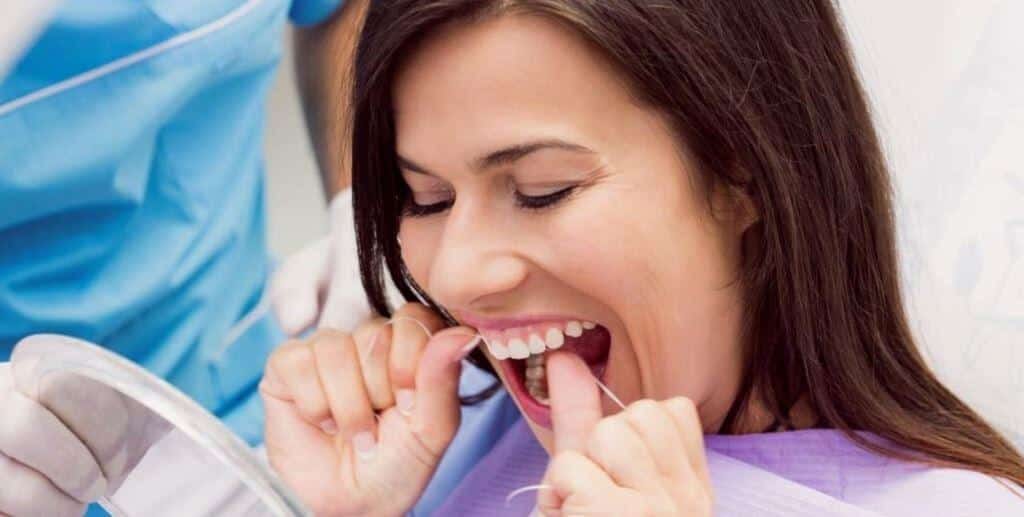
Use roughly 30–45 cm of floss, holding a short section firmly between your fingers. Guide it through the contact between two teeth with a gentle movement. Do not snap it down into the gum.
Curve the floss around the side of one tooth and move it gently up and down, reaching just beneath the gum edge without forcing it. Then clean the facing side of the neighbouring tooth. Move to a clean section of floss as you continue, and remember the back surface of your last tooth.
The movement should follow the tooth surface. Dragging or pulling hard against the gum can injure it. If floss repeatedly catches or shreds in one place, ask your dentist to check the area rather than forcing it through.
How often should you clean between teeth?
Aim to clean between your teeth once a day. Doing it before brushing can make it part of a consistent routine. Brushing is still needed twice daily with fluoride toothpaste; flossing does not replace it.
Some bleeding can occur when gums are inflamed, but bleeding alone does not tell you whether you have periodontitis. Keep cleaning gently and arrange a dental check if your gums bleed regularly, are swollen or sore, or if you have persistent bad breath. Do not assume that a more forceful technique will solve the problem.
Choosing floss or another cleaning aid
Waxed floss or dental tape may feel easier to guide between tight teeth. The best choice depends on the space and what you can handle comfortably, rather than a rule that one type suits everyone. Products labelled as whitening floss are not a substitute for assessed whitening treatment, and fluoride on floss does not replace fluoride toothpaste.
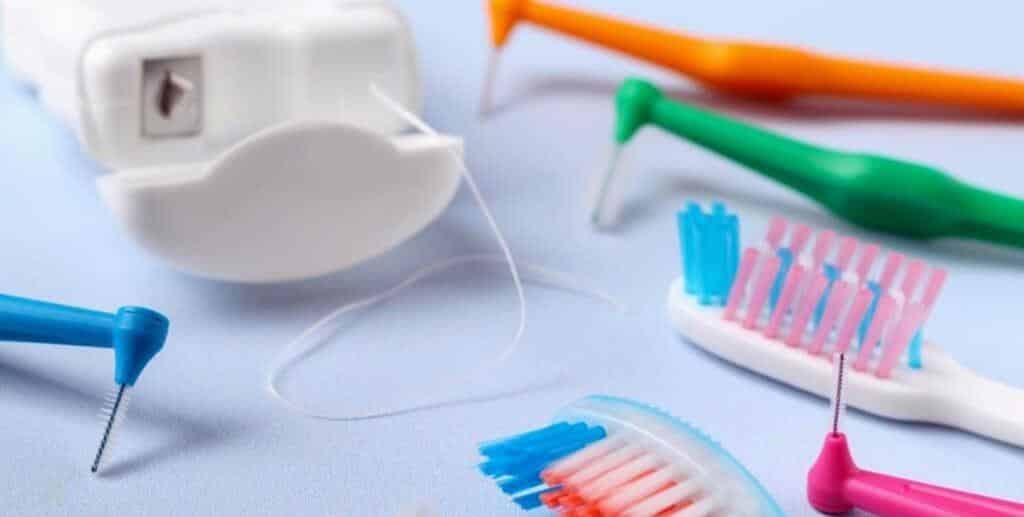
An interdental brush should fit comfortably without having to be forced. You may need more than one size for different spaces. A floss holder can be easier if handling a length of floss is awkward. A water flosser may be useful for some people, but ask how to use it alongside the rest of your cleaning routine.
Braces, bridges and implants can need a different approach. Ask for a demonstration of how to clean around your particular restoration or appliance. Children may also need help cleaning between teeth that touch; your dental team can advise when to start and how to assist safely.
What home cleaning cannot do
Floss does not remove hardened tartar, repair decay or guarantee that you will never develop gum disease. Dental reviews and any recommended professional cleaning remain important, with the frequency based on your needs rather than a fixed schedule for everyone.
If you are unsure about your technique, book an appointment and ask us to show you. For treatment payment options, see the current finance information. Finance depends on eligibility, status, affordability checks and the terms of the agreement.