
Denture repairs: what can be repaired and what does it cost?
Originally published
A denture can crack, lose a tooth or stop fitting comfortably. This can happen through wear, an accidental drop or changes in your mouth; damage is not necessarily a sign that you have neglected it. Arrange a dental assessment rather than trying to carry on with a sharp or unstable denture.
Keep any broken pieces and bring them, along with the denture, to your appointment. Do not use household glue, file the denture or bend its clasps yourself. These attempts can affect the fit, irritate your mouth and make a professional repair more difficult.
Why do dentures need attention?
Both complete and partial dentures need checking over time. The gums and jawbone beneath them can change shape, while the denture itself can wear. A denture that rocks or repeatedly breaks may have a fit or bite problem that a repair alone will not resolve.
A missing tooth does not automatically make every neighbouring tooth loose or decayed. Dentures are one option for replacing teeth; whether you need one, and which design is suitable, depends on your mouth and preferences.
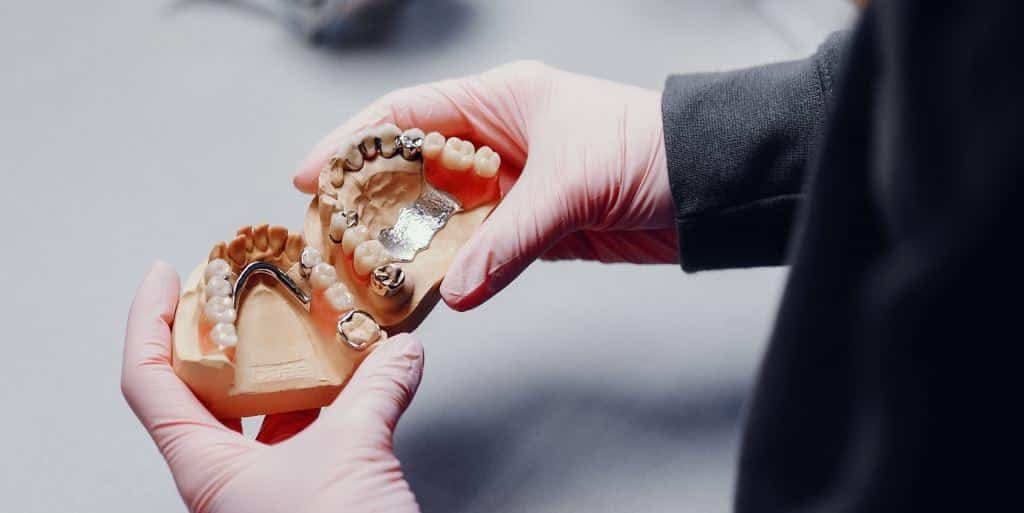
Repair, adjustment or replacement?
The dentist will check the damage, the fit and the tissues beneath the denture. A laboratory may be able to mend a fracture or replace a missing denture tooth, but the material and extent of the damage affect what is possible. Not every denture can be repaired successfully.
An adjustment changes a small area of the denture, while a reline alters the surface that rests on the gums to improve its fit. A new denture may be more appropriate if the existing one is badly worn, repeatedly breaks or no longer provides a suitable fit and bite.
There is no universal rule that every denture must be replaced after three to five years. Regular assessment is more useful than a fixed expiry date. Ask how long the work is likely to take and whether you will need to leave the denture with the laboratory; same-day repair is not always possible.
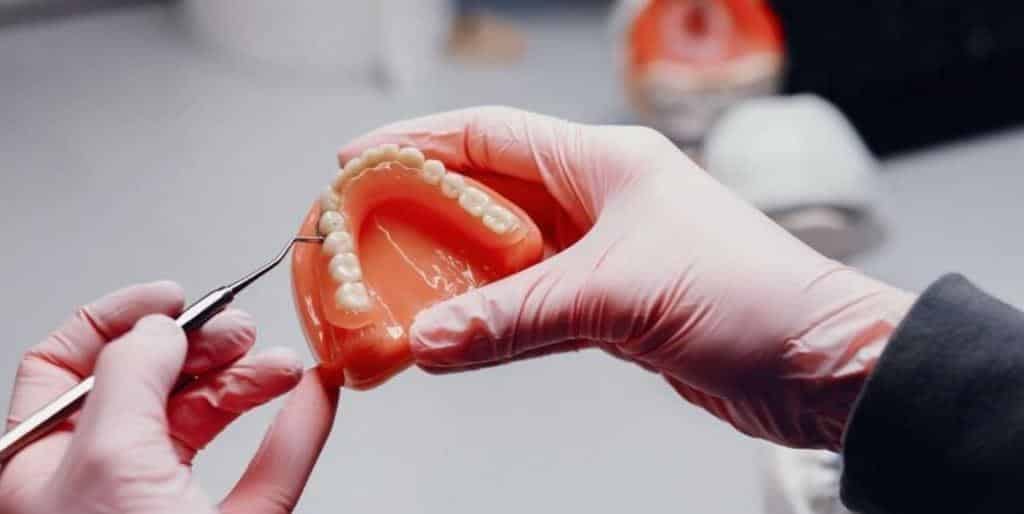
Looking after your denture
Clean it morning and evening with a soft brush and a suitable non-abrasive cleaner. Ordinary toothpaste can scratch it. Cleaning over a folded towel or a basin of water helps protect it if you drop it. Clean your remaining teeth, gums and tongue too.
Usually, dentures should be removed at night unless your dentist advises otherwise. Follow the storage instructions for the material: water or a suitable denture-cleaning solution may be appropriate. A blanket ban on storing dentures in water is incorrect. Avoid hot water and check which cleaners are safe, particularly if the denture contains metal.
Arrange a review if you develop soreness, redness or difficulty eating, or if the denture slips. Do not use adhesive to keep wearing a broken denture instead of having it assessed.
Laboratory repair fees
Our listed denture repair fees are:
- Acrylic denture: £120.
- Metal-framed denture: £200.
- Flexible denture: £250.
The fee list marks these laboratory repairs as having no guarantee. Ask what this means for your proposed repair, whether it is feasible and what alternatives are available. See the prosthodontic fees for the current listings; a repair fee is not the cost of a replacement denture.
Finance may be available subject to status, affordability and terms. Medical-Dent acts as a credit broker, not a lender; check the current finance information.
Contact us to arrange an assessment of a damaged or uncomfortable denture.