
Dental crowns: when they help and what treatment involves
Originally published
A dental crown is a fixed restoration that covers a prepared tooth. It can restore its shape and function when a filling alone would not provide enough support. Crowns can be used on front or back teeth, but choosing one involves balancing the benefit against removal of tooth tissue.
A crown over a natural tooth needs a tooth underneath to support it. Replacing a missing tooth involves a different plan, such as a bridge, denture or implant-supported crown.

When might a crown be recommended?
A large cavity, extensive fracture or substantial wear may leave a tooth needing more than a filling. A tooth that has had root canal treatment may also need a crown, depending on its position and how much sound tissue remains.
The dentist assesses decay, the root, gums and bite before recommending treatment. Any active disease needs to be addressed. Crowns are not routinely placed on healthy teeth just because their colour or shape is unwanted: less extensive options may be suitable.
Sometimes a post and core can help retain a crown on a root-filled tooth with little remaining structure. This does not make every damaged tooth restorable, and a post is not the same as an implant. If the tooth cannot be saved, the dentist should discuss extraction and replacement options separately.
Preparing and fitting a crown
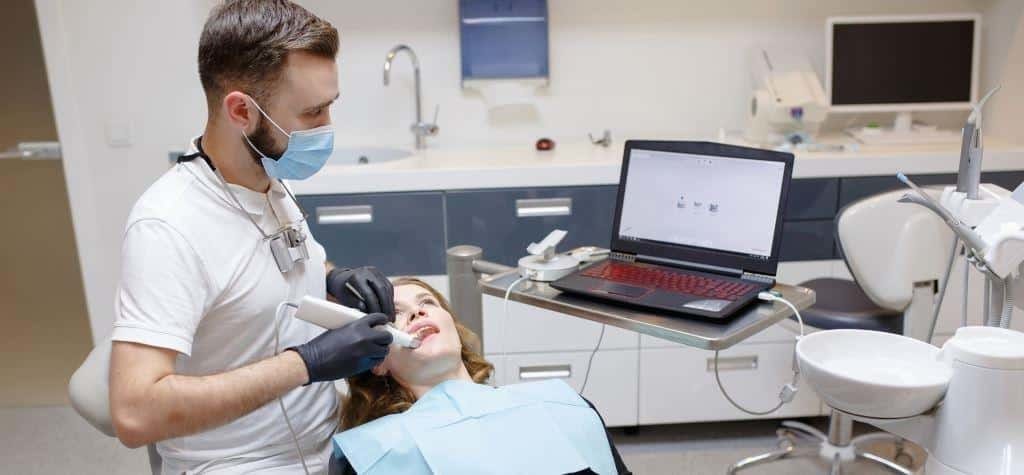
The dentist reshapes the tooth to make room for the crown, using local anaesthetic where needed. Tell them if you feel pain so they can pause and reassess. Preparation is irreversible, so the reasons and alternatives should be clear before treatment starts.
A digital scan or conventional impression records the prepared tooth and bite. Our crown fee descriptions include digital CEREC scanning. A scan records the shape; it does not by itself guarantee a perfect fit or mean every crown is made and fitted that day.
A temporary crown may protect the tooth while the final restoration is made. At fitting, the dentist checks the crown’s margins, contacts, appearance and bite before securing it. The number of visits depends on the planned work.
Crown materials
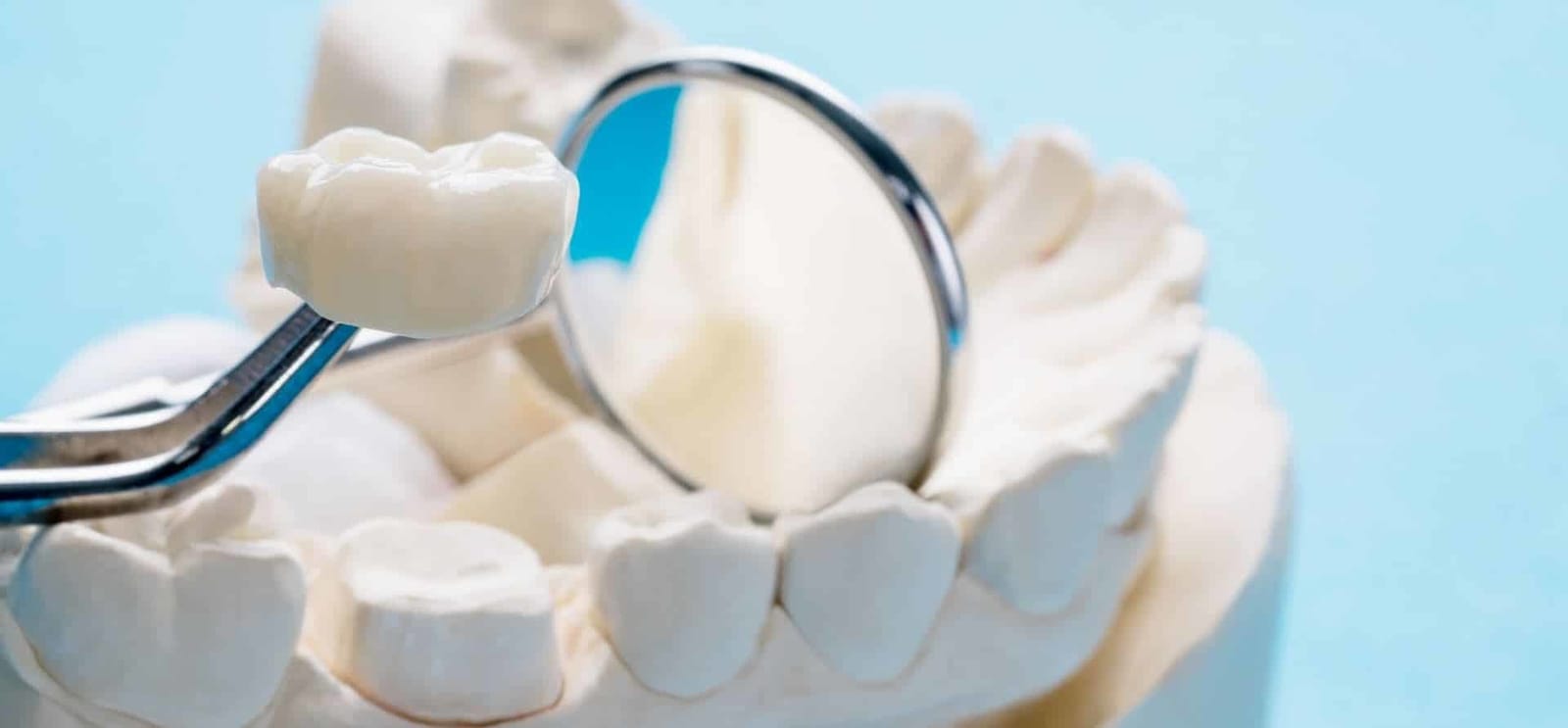
- Porcelain fused to metal: a metal base with a tooth-coloured outer layer. A dark edge can sometimes become visible near the gum.
- All-ceramic crowns: tooth-coloured restorations without a metal base. Different ceramics suit different situations.
- Zirconia crowns: made from a ceramic material, either as a single-piece restoration or with a covering layer. They can still chip or fracture; they are not unbreakable.
- Metal crowns: an option where the tooth, bite and appearance requirements make them suitable.
A temporary crown is a provisional restoration, not another category of porcelain crown. Ask which material is proposed and why, rather than assuming the most expensive option will be best.
Alternatives and looking after the tooth
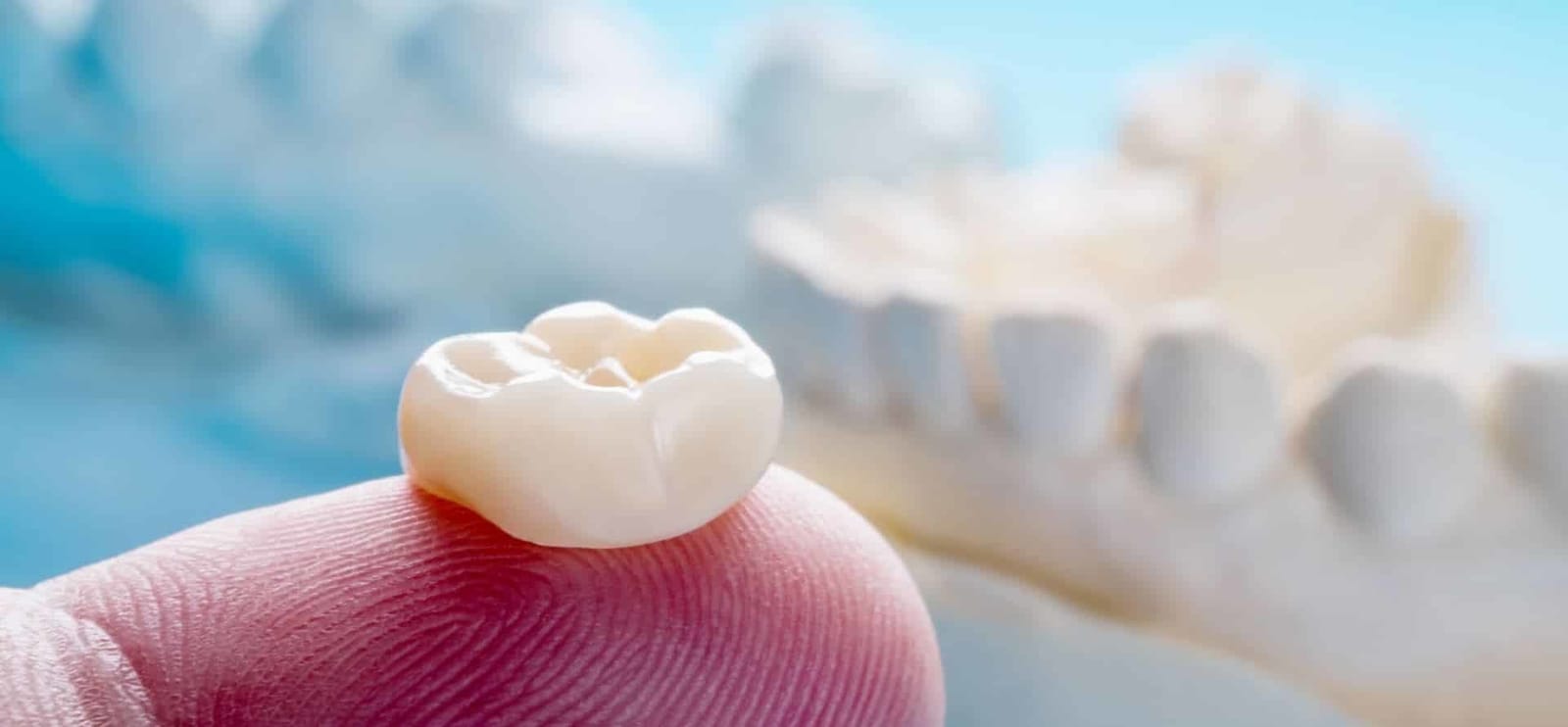
A bonded filling, onlay covering part of the tooth, or selected veneer may preserve more tissue than a full crown. An implant is considered for a missing or unsaveable tooth after assessment; it is not an automatic alternative for a small chip.
A crowned tooth still needs cleaning and review. Problems can include decay at its edge, gum inflammation, loosening or damage to the restoration. Some teeth need root canal treatment later. Tell the dentist about persistent pain, a changed bite or a loose crown.

Brush with fluoride toothpaste, clean between the teeth and attend reviews at the interval advised for you. Ask about protection if you grind your teeth. No crown has a guaranteed lifespan.
See our prosthodontic fees and ask whether the estimate includes any build-up, root canal treatment or other preparation. For payment options, read the current finance information, or contact the practice.