Dental appointments and coronavirus: an updated guide
Originally published · Updated
This article was first published in September 2020 and updated in September 2026. The original pandemic booking instructions and screenshots are historical. They should not be used to establish today’s deposit, cancellation or attendance rules.
For current arrangements, contact the practice and follow the instructions supplied with your appointment. Tell us about any access needs or help you may need during your visit.
If you feel unwell before an appointment
Contact the practice before travelling if you have symptoms of a respiratory infection or have tested positive for COVID-19. Explain both your illness and your dental problem so the team can advise on timing and appropriate arrangements. Do not simply arrive unannounced or leave urgent dental symptoms untreated.
The NHS advises staying at home and avoiding contact with others if you have symptoms and a high temperature, or feel too unwell for normal activities. The advice for returning to everyday activities does not replace the dental team’s instructions about an appointment.
Booking and payments
Use the details on our contact page to ask about availability. All patients pay a £50 deposit when booking, credited towards the appointment fee. For appointments lasting one hour or longer, the deposit is £100. Contact us promptly if you need to cancel or rearrange. Please give at least 48 hours’ notice of cancellation; deposits are not refunded for appointments cancelled with less than 48 hours’ notice.
Historical example from 2020 — this is not a current payment instruction or price.
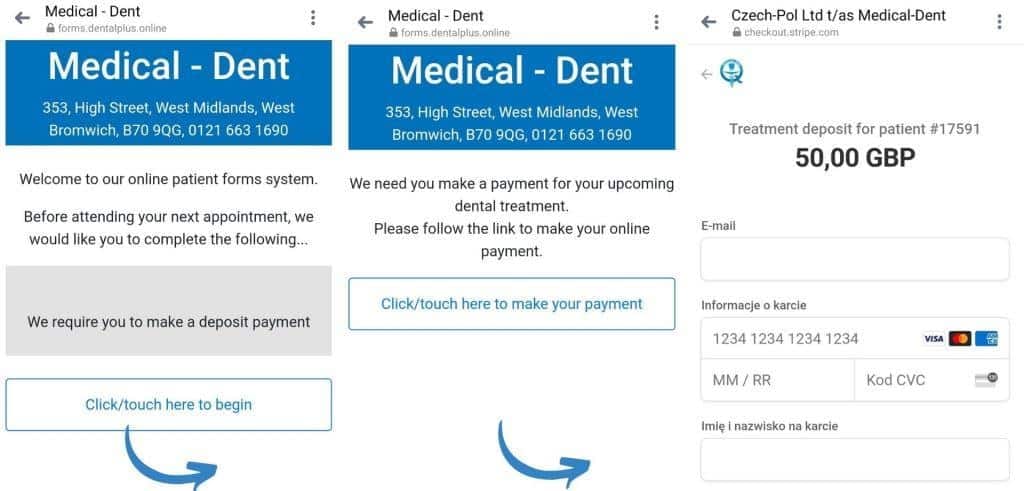
If a payment message is unexpected or you are unsure whether it is from the practice, check using the contact details you already trust before opening a link or entering payment details.
Medical history and arrival
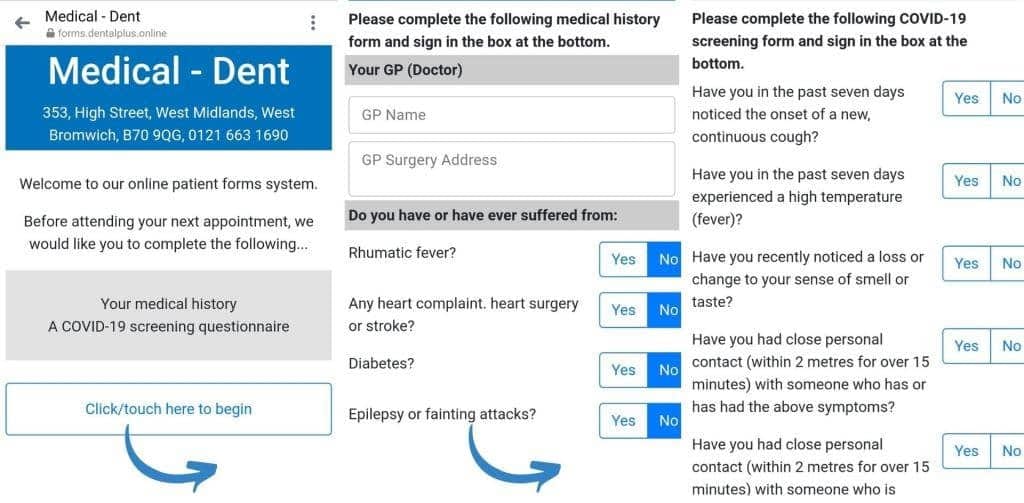
Provide an up-to-date medical history, including medicines, allergies and relevant changes in health. Contact the team if you cannot complete a requested form or need help with it. Do not stop prescribed medicines yourself in preparation for dental treatment.
Historical example from 2020 — the screening questions below do not describe the current requirements for attending.
Only the patient stays in the surgery or reception; a child may attend with one parent. Tell the team in advance about any accessibility or support needs. The former instructions about temperature checks and toilet access were part of the pandemic article and are not presented here as current rules.
Continuing treatment started elsewhere
If your treatment began at another practice, explain this when enquiring and ask what records are needed. A new dentist will need to assess your mouth and agree a plan before continuing care. Acceptance, availability and costs cannot be assumed from a previous appointment or an old article.
We do not continue orthodontic treatment with a brace fitted at another practice. If you choose to have a new brace fitted with us, you pay the new brace fee and there is no separate charge for removing the old brace. This removal arrangement applies when a new brace is fitted with us.
When dental symptoms need prompt help
Contact a dentist promptly for significant or worsening toothache, swelling, an injury or uncontrolled bleeding. If you cannot reach a dentist and need urgent dental advice, contact NHS 111. Mention any respiratory symptoms when seeking care so appropriate arrangements can be made.
Call 999 or go to A&E for severe swelling affecting breathing or swallowing, or serious facial injury. Do not wait for a routine appointment in these circumstances.
Routine visits also remain important, but the right date and arrangements depend on your health and the care needed. Contact the team if you need to rearrange rather than relying on the refund or booking deadlines stated in the original 2020 version.