
Chipped tooth: what to do and how it can be repaired
Originally published
If a piece of tooth breaks off, contact a dentist for advice and an appointment, even if it does not hurt. A small chip may be straightforward to repair, but the size of the visible defect does not tell you everything about the damage.
If you find the fragment, put it in milk or in saliva collected in a clean container and take it with you. The dentist may be able to reattach it. Do not try to glue or file the tooth yourself.
When is help urgent?
Tell the practice if the tooth was injured in an accident, feels loose or has moved, or if you have significant pain or swelling. Ask for urgent dental advice or contact NHS 111 for a dental injury, severe pain affecting sleep or daily life, or symptoms that persist or worsen.
Go to A&E or call 999 for a serious injury to the face or jaw, heavy mouth bleeding that will not stop, or severe swelling affecting breathing. A head or facial injury followed by loss of consciousness, vomiting or double vision also needs emergency help.
A whole tooth knocked out is a different emergency from a broken fragment. Seek emergency dental care immediately. The NHS urgent dental care guide explains where to get help.
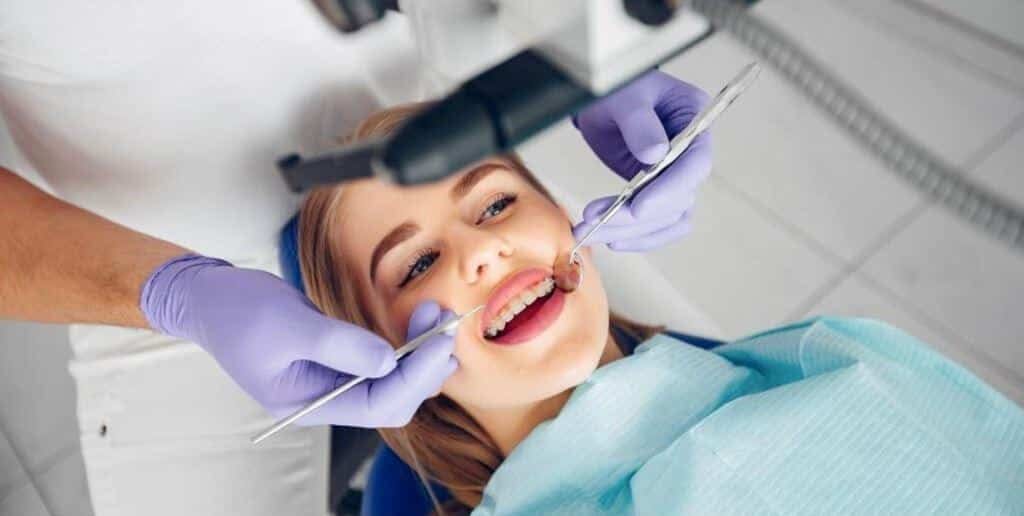
How can a chipped tooth be repaired?
The dentist examines the tooth and may take X-rays or carry out other tests. Treatment depends on how much tissue is lost, whether the pulp inside the tooth is affected and whether the tooth can be restored.
A very small chip may only need careful smoothing. Other options include reattaching a fragment or rebuilding the tooth with a tooth-coloured filling. More extensive damage may need an onlay or crown. Root canal treatment may be needed if the pulp is badly damaged or infected.
An implant does not repair an existing chipped tooth. It may be considered as a replacement if a tooth cannot be saved and has to be removed. A veneer is suitable for some front-tooth problems, but it cannot guarantee that damage will never happen again.
The NHS chipped tooth guide describes common treatments. Our guide to composite restoration explains one way of repairing missing tooth structure.
While waiting for the appointment
Avoid biting hard foods on the damaged tooth. Keep the area clean gently, and ask a pharmacist about suitable pain relief if needed. Follow the packet instructions. Do not put off care simply because pain has eased.
A sharp edge can irritate the tongue or cheek. A deeper break may leave the tooth sensitive or vulnerable to further damage. Follow-up can be important after an injury even when the first repair seems comfortable.

Reducing the risk of further damage
Use an appropriate mouthguard for contact sports and discuss tooth grinding with your dentist. Treating decay and completing any recommended restoration after root canal treatment can help protect vulnerable teeth. The amount of remaining tooth structure matters; root canal treatment does not make every tooth equally fragile.
Daily cleaning and dental reviews help identify problems, but they cannot prevent every accident or fracture. If a tooth keeps chipping, have the cause assessed rather than repeatedly repairing the edge alone.
See our dentistry fees and ask for an estimate once the tooth has been assessed. Payment options are explained in the current finance information. Contact the practice and describe what happened so the team can advise on timing.